One writes, that 'Other friends remain,'
That 'Loss is common to the race'--
And common is the commonplace,
And vacant chaff well meant for grain.
That loss is common would not make
My own less bitter, rather more:
Too common! Never morning wore
To evening, but some heart did break.
O father, wheresoe'er thou be,
Who pledgest now thy gallant son;
A shot, ere half thy draught be done,
Hath still'd the life that beat from thee.
O mother, praying God will save
Thy sailor,--while thy head is bow'd,
His heavy-shotted hammock-shroud
Drops in his vast and wandering grave.
Ye know no more than I who wrought
At that last hour to please him well;
Who mused on all I had to tell,
And something written, something thought;
Expecting still his advent home;
And ever met him on his way
With wishes, thinking, 'here to-day,'
Or 'here to-morrow will he come.'
O somewhere, meek, unconscious dove,
That sittest ranging golden hair;
And glad to find thyself so fair,
Poor child, that waitest for thy love!
For now her father's chimney glows
In expectation of a guest;
And thinking 'this will please him best,'
She takes a riband or a rose;
For he will see them on to-night;
And with the thought her colour burns;
And, having left the glass, she turns
Once more to set a ringlet right;
And, even when she turn'd, the curse
Had fallen, and her future Lord
Was drown'd in passing thro' the ford,
Or kill'd in falling from his horse.
O what to her shall be the end?
And what to me remains of good?
To her, perpetual maidenhood,
And unto me no second friend.
1.3k
One writes, that 'Other friends remain,'
That 'Loss is common to the race'--
And common is the commonplace,
And vacant chaff well meant for grain.
That loss is common would not make
My own less bitter, rather more:
Too common! Never morning wore
To evening, but some heart did break.
O father, wheresoe'er thou be,
Who pledgest now thy gallant son;
A shot, ere half thy draught be done,
Hath still'd the life that beat from thee.
O mother, praying God will save
Thy sailor,--while thy head is bow'd,
His heavy-shotted hammock-shroud
Drops in his vast and wandering grave.
Ye know no more than I who wrought
At that last hour to please him well;
Who mused on all I had to tell,
And something written, something thought;
Expecting still his advent home;
And ever met him on his way
With wishes, thinking, 'here to-day,'
Or 'here to-morrow will he come.'
O somewhere, meek, unconscious dove,
That sittest ranging golden hair;
And glad to find thyself so fair,
Poor child, that waitest for thy love!
For now her father's chimney glows
In expectation of a guest;
And thinking 'this will please him best,'
She takes a riband or a rose;
For he will see them on to-night;
And with the thought her colour burns;
And, having left the glass, she turns
Once more to set a ringlet right;
And, even when she turn'd, the curse
Had fallen, and her future Lord
Was drown'd in passing thro' the ford,
Or kill'd in falling from his horse.
O what to her shall be the end?
And what to me remains of good?
To her, perpetual maidenhood,
And unto me no second friend.
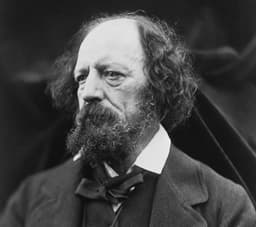
1809 - 1882/Male/English