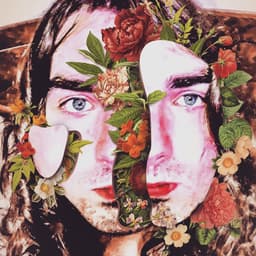
undulating, waves in a dream;
white owl slipping eyes through me,
gleaming in the night
aloft with arcane insight
strange, bewitching mind prism
reflecting self contextually
speaking echoes voicelessly
like puffs of smoke erasing me:
there is no thorn in my foot
while i limp down the road
drenched in the fading red sun
i am the fog at dusk
somewhere beyond the veil,
in a misplaced pocket of time
i hear the laughter of raucous celebration
not in shimmering marble halls
but amongst the pariah
under the bridge, emanating heart-song
Aug 3, 2025
Aug 3, 2025 at 12:47 AM UTC
I need someone to believe in me
because lately I’ve felt ephemeral, intangible
a ghost somehow still trapped in
gravity’s well
slipping through the floor
I’m losing shape and heading to the core
where I’ll be burnt up, nothing more
I need someone to dream of me
write of me
turn me into echoes throughout history
however quiet the whispers may be
still, a legacy
As of yet, I regret to be
shrouded in mystery
even to myself
I am null, swallowing symphonies
and churning out cacophony
incessantly
Aug 3, 2025
Aug 3, 2025 at 12:45 AM UTC
Zen Death Haiku & Related Translations of Oriental Poems
In what may be called "Zen death haiku" and other forms of jisei (death poems) such as waka/tanka, life on earth is often compared to dew, to a wind-blown petal, to a tree shedding its leaves, to an empty shell, to melting snow or ice, etc.
Brittle cicada shell,
little did I know
that you were my life!
—Shuho (?-1767), loose translation by Michael R. Burch
Our world of dew
is a world of dew indeed;
and yet, and yet ...
― Kobayashi Issa, loose translation/interpretation by Michael R. Burch
Both victor and vanquished are dewdrops:
flashes of light
briefly illuminating the void.
—Ouchi Yoshitaka, loose translation/interpretation of his jisei (death poem) by Michael R. Burch
Like dew glistening
on a lotus leaf,
so too I soon must vanish.
—Shinsui (1720-1769), loose translation by Michael R. Burch
Let this body
be dew
in a field of wildflowers.
—Tembo (1740-1823), loose translation by Michael R. Burch
My aging body:
a drop of dew
bulging at the leaf-cliff.
—Kiba (-1868), loose translation/interpretation of his jisei (death poem) by Michael R. Burch
Like a lotus leaf’s evaporating dew,
I vanish.
—Senryu (-1827), loose translation/interpretation of his jisei (death poem) by Michael R. Burch
This world?
Moonlit dew
flicked from a crane’s bill.
—Eihei Dogen Kigen, loose translation/interpretation by Michael R. Burch
Seventy-one?
How long
can a dewdrop last?
—Eihei Dogen Kigen, loose translation/interpretation of his jisei (death poem) by Michael R. Burch
Dewdrops beading grass-blades
die before dawn;
may an untimely wind not hasten their departure!
—Eihei Dogen Kigen, loose translation/interpretation by Michael R. Burch
Outside my window the plums, blossoming,
within their curled buds, contain the spring;
the moon is reflected in the cup-like whorls
of the lovely flowers I gather and twirl.
—Eihei Dogen Kigen, loose translation/interpretation by Michael R. Burch
Unaware it protects
the hilltop paddies,
the scarecrow seems useless to itself.
—Eihei Dogen Kigen, loose translation/interpretation by Michael R. Burch
The cluttered bucket's bottom broke;
now neither water nor the moon remains.
—Eihei Dogen Kigen, loose translation/interpretation by Michael R. Burch
I won't stop
at the valley brook
for fear my shadow
may be swept into the world.
—Eihei Dogen Kigen, loose translation/interpretation by Michael R. Burch
Although I may
see it again someday,
how can I sleep
with the autumn moon intruding?
—Eihei Dogen Kigen, loose translation/interpretation by Michael R. Burch
Like a frail blade of grass,
I pass
over Mt. Kinobe,
my feelings drifting with the clouds.
—Eihei Dogen Kigen, loose translation/interpretation by Michael R. Burch
How meaningless birth-death with its ceaseless ebbing and rising!
I struggle to find my path as if walking in a dream.
And yet there are things I cannot forget:
the lush grass of Fukakusa shimmers after an evening rain.
—Eihei Dogen Kigen, loose translation/interpretation by Michael R. Burch
Living so long without attachments,
having given up paper and pen,
I see flowers and hear birds while feeling very little;
dwelling on this mountain, I’m embarrassed by my meager response.
—Eihei Dogen Kigen, loose translation/interpretation by Michael R. Burch
Peach blossoms begin to fall apart
in a spring wind:
doubts do not grow
branches, leaves and flowers.
—Eihei Dogen Kigen, loose translation/interpretation by Michael R. Burch
Ebb tide.
Not even the wind claims
an abandoned boat.
The moon is a bright herald of midnight.
—Eihei Dogen Kigen, loose translation/interpretation by Michael R. Burch
A solitary crow
clings to a leafless branch:
nightfall
—Matsuo Basho, loose translation/interpretation by Michael R. Burch
Unaware it protects
the hilltop paddies,
the scarecrow seems useless to itself.
—Eihei Dogen Kigen, loose translation/interpretation by Michael R. Burch
Since time dawned
only the dead have experienced peace;
life is snow burning in the sun.
—Nandai (1786-1817), loose translation by Michael R. Burch
Like blocks in the icehouse,
unlikely to last
the year out...
—Sentoku (1661-1726), loose translation by Michael R. Burch
Bury me beneath a wine barrel
in a bibber’s cellar:
with a little luck the keg will leak.
—Moriya Senan (?-1838), loose translation by Michael R. Burch
Having been summoned,
I say farewell
to my house beneath the moon.
—Takuchi (1767-1846), loose translation by Michael R. Burch
Learn to accept the inevitable:
the fall willow
knows when to abandon its leaves.
—Tanehiko (1782-1842), loose translation by Michael R. Burch
All evening the softest sound―
the cadence of the white camellia petals
falling
―Ranko Takakuwa (1726-1798), loose translation/interpretation by Michael R. Burch
Stillness:
the sound of petals
drifting down softly together ...
―Miura Chora (1729-1780), loose translation/interpretation by Michael R. Burch
White plum blossoms―
though the hour grows late,
a glimpse of dawn
―Yosa Buson, loose translation/interpretation by Michael R. Burch
The poem above is believed to be Buson's jisei (death poem) and he is said to have died before dawn.
Lately the nights
dawn
plum-blossom white.
―Yosa Buson, loose translation/interpretation by Michael R. Burch
This is a second interpretation of Buson's jisei (death poem).
In the deepening night
I saw by the light
of the white plum blossoms
―Yosa Buson, loose translation/interpretation by Michael R. Burch
This is a third interpretation of Buson's jisei (death poem).
Returning
as it came,
this naked worm.
—Shidoken (?-1765), loose translation by Michael R. Burch
There is no death, as there is no life.
Are not the skies cloudless
And the rivers clear?
—Taiheiki Toshimoto (-1332), loose translation/interpretation of his jisei (death poem) by Michael R. Burch
All five aspects of my fleeting human form
And the four elements of existence add up to nothing:
I bare my neck to the unsheathed sword
And its blow is but a breath of wind ...
—Suketomo (1290-1332), loose translation/interpretation of his jisei (death poem) by Michael R. Burch
Had I not known I was already dead
I might have mourned
my own passing.
—Ota Dokan (1432-1486), loose translation/interpretation of his jisei (death poem) by Michael R. Burch
I wish only to die
swiftly, with my eyes
fixed on Mount Fuji.
—Rangai (1770-1845), loose translation by Michael R. Burch
A strident cricket
accompanies me
through autumn mountains.
—Shiko (1788-1845), loose translation by Michael R. Burch
The cherry orchard’s owner
becomes compost
for his trees.
—Utsu (1813-1863), loose translation by Michael R. Burch
Autumn ends,
the frogs find their place
in the earth.
—Shogetsu (1829-1899), loose translation by Michael R. Burch
The night is clear;
the moon shines quietly;
the wind strums the trees like lyres...
but when I’m gone, who the hell will hear?
Farewell!
—Higan Choro aka Zoso Royo (1194-1277), loose translation by Michael R. Burch
I entered the world empty-handed
and now leave it barefoot.
My coming & going?
Two uncomplicated events
that became entangled.
—Kozan Ichikyo (1283-1360), loose translation by Michael R. Burch
Brittle autumn leaves
crumble to dust
in the freezing wind.
—Takao (?-1660), loose translation by Michael R. Burch
This frigid season
nothing but the shadow
of my corpse survives.
—Tadatomo (1624-1676), loose translation by Michael R. Burch
My life was mere lunacy
until
the moon shone tonight.
Tokugen (1558-1647), loose translation by Michael R. Burch
“Isn’t it time,”
the young bride asks,
“to light the lantern?”
Ochi Etsujin (1656-1739), loose translation by Michael R. Burch
With the departing year
I have hidden my graying hair
from my parents.
Ochi Etsujin (1656-1739), loose translation by Michael R. Burch
I wish to die
under the spring cherry blossoms
and April’s full moon.
Ochi Etsujin (1656-1739), loose translation by Michael R. Burch
Once again
the melon-cool moon
rises above the rice fields.
—Tanko (1665-1735), loose translation by Michael R. Burch
At long last I depart:
above me are rainless skies and a pristine moon
as pure as my heart.
—Senseki (1712-1742), loose translation by Michael R. Burch
Cuckoo, lift
me up
to where clouds drift...
Uko (1686-1743), loose translation by Michael R. Burch
Sixty-six,
setting sail through tranquil waters,
a breeze-blown lotus.
Usei (1698-1764), loose translation by Michael R. Burch
Is it me the raven screeches for
from the spirit world
this frigid morning?
—Shukabo (1717-1775), loose translation by Michael R. Burch
To prepare for my voyage beyond,
let me don
a gown of flowers.
—Setsudo (1715-1776), loose translation by Michael R. Burch
From depths
unfathomably cold:
the oceans roar!
—Kasenjo (d. 1776), loose translation by Michael R. Burch
Today Mount Hiei’s sky
with a quick change of clouds
also removes its robes.
Shogo (1731-1798), loose translation by Michael R. Burch
I cup curious ears
among the hydrangeas
hoping to hear the spring cuckoo.
—Senchojo (?-1802), loose translation by Michael R. Burch
Life,
is it not like
a charcoal sketch, an obscure shadow?
—Toyokuni (?-1825), loose translation by Michael R. Burch
Bitter winter winds...
but later, river willow,
remember to open your buds!
—Senryu (1717-1790), loose translation by Michael R. Burch
A fall willow tree:
unlikely to be missed
as much as the cherry blossoms.
—Senryu II (?-1818), loose translation by Michael R. Burch
My path
to Paradise
is bright with flowers.
—Sokin (?-1818), loose translation by Michael R. Burch
A willow branch
unable to reach the water
at the bottom of the vase.
—Shigenobu (?-1832), loose translation by Michael R. Burch
A night storm sighs:
"The fate of the flower is to fall" ...
rebuking all who hesitate
―Yukio Mishima, loose translation/interpretation by Michael R. Burch; this is said to have been his death poem before committing ritual suicide.
But one poet, at least, cast doubt on the death poem enterprise:
Death poems?
****** delusions―
Death is death!
―Toko, loose translation/interpretation by Michael R. Burch
Other haiku translations …
Masaoka Shiki
The night flies!
My life,
how much more of it remains?
―Masaoka Shiki (1867-1902), loose translation/interpretation by Michael R. Burch
The autumn wind eludes me;
for me there are no gods,
no Buddhas
―Masaoka Shiki (1867-1902), loose translation/interpretation by Michael R. Burch
After killing a spider,
how lonely I felt
in the frigid night.
―Masaoka Shiki (1867-1902), loose translation/interpretation by Michael R. Burch
Such a small child
banished to become a priest:
frigid Siberia!
―Masaoka Shiki (1867-1902), loose translation/interpretation by Michael R. Burch
I'm trying to sleep!
Please swat the flies
lightly
―Masaoka Shiki (1867-1902), loose translation/interpretation by Michael R. Burch
A summer river:
disdaining the bridge,
my horse gallops through water.
―Masaoka Shiki (1867-1902), loose translation/interpretation by Michael R. Burch
After the fireworks,
the spectators departed:
how vast and dark the sky!
―Masaoka Shiki (1867-1902), loose translation/interpretation by Michael R. Burch
I got drunk
then wept in my sleep
dreaming of wild cherry blossoms.
―Masaoka Shiki (1867-1902), loose translation/interpretation by Michael R. Burch
We cannot see the moon
and yet the waves still rise
―Masaoka Shiki (1867-1902), loose translation/interpretation by Michael R. Burch
The first morning of autumn:
the mirror I investigate
reflects my father’s face
―Masaoka Shiki (1867-1902), loose translation/interpretation by Michael R. Burch
I thought I felt a dewdrop
plop
on me as I lay in bed!
― Masaoka Shiki, loose translation/interpretation by Michael R. Burch
As thunder recedes
a lone tree stands illuminated in sunlight:
applauded by cicadas
― Masaoka Shiki, loose translation/interpretation by Michael R. Burch
Yosa Buson haiku translations
On the temple’s great bronze gong
a butterfly
snoozes.
―Yosa Buson, loose translation/interpretation by Michael R. Burch
Hard to describe:
this light sensation of being pinched
by a butterfly!
―Yosa Buson, loose translation/interpretation by Michael R. Burch
Not to worry spiders,
I clean house ... sparingly.
―Yosa Buson, loose translation/interpretation by Michael R. Burch
Among the fallen leaves,
an elderly frog.
―Yosa Buson, loose translation/interpretation by Michael R. Burch
In an ancient well
fish leap for mosquitoes,
a dark sound.
―Yosa Buson, loose translation/interpretation by Michael R. Burch
Flowers with thorns
remind me of my hometown ...
―Yosa Buson, loose translation/interpretation by Michael R. Burch
Reaching the white chrysanthemum
the scissors hesitate ...
―Yosa Buson, loose translation/interpretation by Michael R. Burch
A kite floats
at the same place in the sky
where yesterday it floated ...
―Yosa Buson, loose translation/interpretation by Michael R. Burch
Picking autumn plums
my wrinkled hands
once again grow fragrant
―Yosa Buson, loose translation/interpretation by Michael R. Burch
A silk robe, casually discarded,
exudes fragrance
into the darkening evening
―Yosa Buson, loose translation/interpretation by Michael R. Burch
Whose delicate clothes
still decorate the clothesline?
Late autumn wind.
―Yosa Buson, loose translation/interpretation by Michael R. Burch
This is an example of a translation in which I interpreted the poem before translating it. In the original poem the clothes were thin (suggesting suggestive garments). In Japanese poetry an autumn wind can represent loneliness. So I interpreted the poem to be about an aging woman who still wears enticing clothes but is increasingly lonely. Since in the West we don't normally drape clothes on screens, I moved the clothes to a clothesline, which works well with the wind. For me it's a sad poem about something that happens all too often to people as they age.
An evening breeze:
water lapping the heron’s legs.
―Yosa Buson, loose translation/interpretation by Michael R. Burch
gills puffing,
a hooked fish:
the patient
―Yosa Buson, loose translation/interpretation by Michael R. Burch
The stirred morning air
ruffles the hair
of a caterpillar.
―Yosa Buson, loose translation/interpretation by Michael R. Burch
Intruder!
This white plum tree
was once outside our fence!
―Yosa Buson, loose translation/interpretation by Michael R. Burch
Tender grass
forgetful of its roots
the willow
―Yosa Buson, loose translation/interpretation by Michael R. Burch
I believe the poem above can be taken as commentary on ungrateful children. It reminds me of Robert Hayden's "Those Winter Sundays."―MRB
Since I'm left here alone,
I'll make friends with the moon.
―Yosa Buson, loose translation/interpretation by Michael R. Burch
The hood-wearer
in his self-created darkness
misses the harvest moon
―Yosa Buson, loose translation/interpretation by Michael R. Burch
White blossoms of the pear tree―
a young woman reading his moonlit letter
―Yosa Buson, loose translation/interpretation by Michael R. Burch
The pear tree flowers whitely:
a young woman reading his letter
by moonlight
―Yosa Buson, loose translation/interpretation by Michael R. Burch
On adjacent branches
the plum tree blossoms
bloom petal by petal―love!
―Yosa Buson, loose translation/interpretation by Michael R. Burch
A misty spring moon ...
I entice a woman
to pay it our respects
―Yosa Buson, loose translation/interpretation by Michael R. Burch
Courtesans
purchasing kimonos:
plum trees blossoming
―Yosa Buson, loose translation/interpretation by Michael R. Burch
The spring sea
rocks all day long:
rising and falling, ebbing and flowing ...
―Yosa Buson, loose translation/interpretation by Michael R. Burch
As the whale
dives
its tail gets taller!
―Yosa Buson, loose translation/interpretation by Michael R. Burch
While tilling the field
the motionless cloud
vanished.
―Yosa Buson, loose translation/interpretation by Michael R. Burch
Even lonelier than last year:
this autumn evening.
―Yosa Buson, loose translation/interpretation by Michael R. Burch
My thoughts return to my Mother and Father:
late autumn
―Yosa Buson, loose translation/interpretation by Michael R. Burch
Late autumn:
my thoughts return to my Mother and Father
―Yosa Buson, loose translation/interpretation by Michael R. Burch
This roaring winter wind:
the cataract grates on its rocks.
―Yosa Buson, loose translation/interpretation by Michael R. Burch
While snow lingers
in creases and recesses:
flowers of the plum
―Yosa Buson, loose translation/interpretation by Michael R. Burch
Plowing,
not a single bird sings
in the mountain's shadow
―Yosa Buson, loose translation/interpretation by Michael R. Burch
In the lingering heat
of an abandoned cowbarn
only the sound of the mosquitoes is dark.
―Yosa Buson, loose translation/interpretation by Michael R. Burch
The red plum's fallen petals
seem to ignite horse ****
―Yosa Buson, loose translation/interpretation by Michael R. Burch
Dawn!
The brilliant sun illuminates
sardine heads.
―Yosa Buson, loose translation/interpretation by Michael R. Burch
The abandoned willow shines
between bright rains
―Yosa Buson, loose translation/interpretation by Michael R. Burch
Dew-damp grass:
the setting sun’s tears
―Yosa Buson, loose translation/interpretation by Michael R. Burch
The dew-damp grass
weeps silently
in the setting sun
―Yosa Buson, loose translation/interpretation by Michael R. Burch
White plum blossoms―
though the hour grows late,
a glimpse of dawn
―Yosa Buson, loose translation/interpretation by Michael R. Burch
The poem above is believed to be Buson's jisei (death poem) and he is said to have died before dawn.
Lately the nights
dawn
plum-blossom white.
―Yosa Buson, loose translation/interpretation by Michael R. Burch
This is a second interpretation of Buson's jisei (death poem).
In the deepening night
I saw by the light
of the white plum blossoms
―Yosa Buson, loose translation/interpretation by Michael R. Burch
This is a third interpretation of Buson's jisei (death poem).
Our life here on earth:
to what shall we compare it?
Perhaps to a rowboat
departing at daybreak,
leaving no trace of us in its wake?
—Takaha Shugyo or Yosa Buson, loose translation by Michael R. Burch
Matsuo Basho
The legs of the cranes
have been shortened
by the summer rains.
―Matsuo Basho (1644-1694), loose translation/interpretation by Michael R. Burch
A bee emerging
from deep within the peony’s hairy recesses
flies off heavily, sated
―Basho, loose translation/interpretation by Michael R. Burch
A crow has settled
on a naked branch―
autumn nightfall
―Basho, loose translation/interpretation by Michael R. Burch
A solitary crow
clings to a leafless branch:
autumn twilight
―Matsuo Basho (1644-1694), loose translation/interpretation by Michael R. Burch
A solitary crow
clings to a leafless branch:
phantom autumn
―Matsuo Basho (1644-1694), loose translation/interpretation by Michael R. Burch
A raven settles
on a leafless branch:
autumn nightfall
―Matsuo Basho (1644-1694), loose translation/interpretation by Michael R. Burch
A crow roosts
on a leafless branch:
autumn nightmare
―Matsuo Basho (1644-1694), loose translation/interpretation by Michael R. Burch
Winter solitude:
a world awash in white,
the sound of the wind
―Matsuo Basho (1644-1694), loose translation/interpretation by Michael R. Burch
Sick of its autumn migration
my spirit drifts
over wilted fields ...
―Matsuo Basho (1644-1694), said to be his death poem, loose translation/interpretation by Michael R. Burch
Sick of this autumn migration
in dreams I drift
over flowerless fields ...
―Matsuo Basho (1644-1694), said to be his death poem, loose translation/interpretation by Michael R. Burch
Except for a woodpecker
tapping at a post,
the house is silent.
―Basho, loose translation/interpretation by Michael R. Burch
That dying cricket,
how he goes on about his life!
―Basho, loose translation/interpretation by Michael R. Burch
Like a glorious shrine―
on these green, budding leaves,
the sun’s intense radiance.
―Basho, loose translation/interpretation by Michael R. Burch
Kobayashi Issa
Right at my feet!
When did you arrive here,
snail?
― Kobayashi Issa, loose translation/interpretation by Michael R. Burch
I toss in my sleep,
so watch out,
cricket!
― Kobayashi Issa, loose translation/interpretation by Michael R. Burch
In a better world
I'd leave you my rice bowl,
little fly!
― Kobayashi Issa, loose translation/interpretation by Michael R. Burch
All's well with the world:
another fly's sharing our rice!
―Kobayashi Issa (1763-1827), loose translation/interpretation by Michael R. Burch
Cries of the wild geese―
spreading rumors about me?
― Kobayashi Issa, loose translation/interpretation by Michael R. Burch
Wake up, old tomcat,
then with elaborate yawns and stretchings
prepare to pursue love
― Kobayashi Issa, loose translation/interpretation by Michael R. Burch
An enormous frog!
We stare at each other,
both petrified.
― Kobayashi Issa, loose translation/interpretation by Michael R. Burch
Skinny frog,
hang on ...
Issa to the rescue!
― Kobayashi Issa, loose translation/interpretation by Michael R. Burch
While a cicada
sings softly
a single leaf falls ...
― Kobayashi Issa, loose translation/interpretation by Michael R. Burch
The cry of a pheasant,
as if it just noticed
the mountain.
―Kobayashi Issa (1763-1827), loose translation/interpretation by Michael R. Burch
As I stumble home at dusk,
heavy with her eggs
a spider blocks me.
―Kobayashi Issa (1763-1827), loose translation/interpretation by Michael R. Burch
All the while I'm praying to Buddha
I'm continually killing mosquitoes.
―Kobayashi Issa (1763-1827), loose translation/interpretation by Michael R. Burch
This windy nest?
Open your hungry mouth in vain,
Issa, orphaned sparrow!
―Kobayashi Issa (1763-1827), loose translation/interpretation by Michael R. Burch
The ghostly cow comes
mooing mooing mooing
out of the morning mist
―Kobayashi Issa (1763-1827), loose translation/interpretation by Michael R. Burch
If anyone comes, child,
don't open the gate
or the melons will flee!
―Kobayashi Issa (1763-1827), loose translation/interpretation by Michael R. Burch
It's not at all anxious to bloom,
the plum tree at my gate.
―Kobayashi Issa (1763-1827), loose translation/interpretation by Michael R. Burch
Our world of dew
is a world of dew indeed;
and yet, and yet ...
― Kobayashi Issa, loose translation/interpretation by Michael R. Burch
Full moon―
my ramshackle hut
is an open book.
―Kobayashi Issa (1763-1827), loose translation/interpretation by Michael R. Burch
Oh, brilliant moon
can it be true
that even you
must rush off, late
for some date?
― Kobayashi Issa, loose translation/interpretation by Michael R. Burch
Oh, brilliant moon
can it be true that even you
must rush off, tardy?
― Kobayashi Issa, loose translation/interpretation by Michael R. Burch
The snow melts
and the village is flooded with children!
―Kobayashi Issa (1763-1827), loose translation/interpretation by Michael R. Burch
Don't weep, we are all insects!
Lovers, even the stars themselves,
must eventually part.
―Kobayashi Issa (1763-1827), loose translation/interpretation by Michael R. Burch
In our world
we walk suspended over hell
admiring flowers.
―Kobayashi Issa (1763-1827), loose translation/interpretation by Michael R. Burch
Standing beneath cherry blossoms
who can be strangers?
― Kobayashi Issa, loose translation/interpretation by Michael R. Burch
Petals I amass
with such tenderness
***** me to the quick.
― Kobayashi Issa, loose translation/interpretation by Michael R. Burch
Standing unsteadily,
I am the scarecrow’s
skinny surrogate
―Kobayashi Issa (1763-1827), loose translation/interpretation by Michael R. Burch
Autumn wind ...
She always wanted to pluck
the reddest roses
―Kobayashi Issa (1763-1827), loose translation/interpretation by Michael R. Burch
Issa wrote the haiku above after the death of his daughter Sato with the note: “Sato, girl, 35th day, at the grave.”
Other Poets
A pity to pluck,
A pity to pass ...
Ah, violet!
―Naojo, loose translation/interpretation by Michael R. Burch
Silence:
a single chestnut leaf
sinks through clear water ...
―Shohaku, loose translation/interpretation by Michael R. Burch
New Haiku Translations, Added 10/6/2020
Air ballet:
twin butterflies, twice white,
meet, match & mate
—Matsuo Basho, loose translation/interpretation by Michael R. Burch
Denied transformation
into a butterfly,
autumn worsens for the worm
—Matsuo Basho, loose translation/interpretation by Michael R. Burch
Dusk-gliding swallow,
please spare my small friends
flitting among the flowers!
—Matsuo Basho, loose translation/interpretation by Michael R. Burch
Up and at ’em! The sky goes bright!
Let’s hit the road again,
Companion Butterfly!
—Matsuo Basho, loose translation/interpretation by Michael R. Burch
Higher than a skylark,
resting on the breast of heaven:
mountain pass.
—Matsuo Basho, loose translation/interpretation by Michael R. Burch
Farewell,
my cloud-parting friend!
Wild goose migrating.
—Matsuo Basho, loose translation/interpretation by Michael R. Burch
A crow settles
on a leafless branch:
autumn nightfall.
—Matsuo Basho, loose translation/interpretation by Michael R. Burch
An exciting struggle
with such a sad ending:
cormorant fishing.
—Matsuo Basho, loose translation/interpretation by Michael R. Burch
Secretly,
by the light of the moon,
a worm bores into a chestnut.
—Matsuo Basho, loose translation/interpretation by Michael R. Burch
This strange flower
investigated by butterflies and birds:
the autumn sky
—Matsuo Basho, loose translation/interpretation by Michael R. Burch
Where’s the moon tonight?
Like the temple bell:
lost at sea.
—Matsuo Basho, loose translation/interpretation by Michael R. Burch
Spring departs;
birds wail;
the pale eyes of fish moisten.
—Matsuo Basho, loose translation/interpretation by Michael R. Burch
The moon still appears,
though far from home:
summer vagrant.
—Matsuo Basho, loose translation/interpretation by Michael R. Burch
Cooling the pitiless sun’s
bright red flames:
autumn wind.
—Matsuo Basho, loose translation/interpretation by Michael R. Burch
Saying farewell to others
while being told farewell:
departing autumn.
—Matsuo Basho, loose translation/interpretation by Michael R. Burch
Traveling this road alone:
autumn evening.
—Matsuo Basho, loose translation/interpretation by Michael R. Burch
Thin from its journey
and not yet recovered:
late harvest moon.
—Matsuo Basho, loose translation/interpretation by Michael R. Burch
Occasional clouds
bless tired eyes with rest
from moon-viewing.
—Matsuo Basho, loose translation/interpretation by Michael R. Burch
The farmboy
rests from husking rice
to reach for the moon.
—Matsuo Basho, loose translation/interpretation by Michael R. Burch
The moon aside,
no one here
has such a lovely face.
—Matsuo Basho, loose translation/interpretation by Michael R. Burch
The moon having set,
all that remains
are the four corners of his desk.
—Matsuo Basho, loose translation/interpretation by Michael R. Burch
The moon so bright
a wandering monk carries it
lightly on his shoulder.
—Matsuo Basho, loose translation/interpretation by Michael R. Burch
The Festival of Souls
is obscured
by smoke from the crematory.
—Matsuo Basho, loose translation/interpretation by Michael R. Burch
The Festival of Souls!
Smoke from the crematory?
—Matsuo Basho, loose translation/interpretation by Michael R. Burch
Family reunion:
those with white hair and canes
visiting graves.
—Matsuo Basho, loose translation/interpretation by Michael R. Burch
One who is no more
left embroidered clothes
for a summer airing.
—Matsuo Basho, loose translation/interpretation by Michael R. Burch
What am I doing,
writing haiku on the threshold of death?
Hush, a bird’s song!
—Matsuo Basho, loose translation/interpretation by Michael R. Burch
Fallen ill on a final tour,
in dreams I go roving
earth’s flowerless moor.
—Matsuo Basho, loose translation/interpretation of his jisei (death poem) by Michael R. Burch
Stricken ill on a senseless tour,
still in dreams I go roving
earth’s withered moor.
—Matsuo Basho, loose translation/interpretation of his jisei (death poem) by Michael R. Burch
Stricken ill on a journey,
in dreams I go wandering
withered moors.
—Matsuo Basho, loose translation/interpretation of his jisei (death poem) by Michael R. Burch
Today, catching sight of the mallards
crying over Lake Iware:
Must I too vanish into the clouds?
—Prince Otsu (663-686), loose translation/interpretation of his jisei (death poem) by Michael R. Burch
This world—
to what may we compare it?
To autumn fields
lying darkening at dusk
illuminated by lightning flashes.
—Minamoto no Shitago (911-983), loose translation/interpretation of his jisei (death poem) by Michael R. Burch
This world—to what may we liken it?
To autumn fields lit dimly at dusk,
illuminated by lightning flashes.
—Minamoto no Shitago (911-983), loose translation/interpretation of his jisei (death poem) by Michael R. Burch
Like a half-exposed rotten log
my life, which never flowered,
ends barren.
—Minamoto Yorimasa (1104-1180), loose translation/interpretation of his jisei (death poem) by Michael R. Burch
Overtaken by darkness,
I will lodge under a tree’s branches;
cherry blossoms will cushion me tonight.
—Taira no Tadanori (1144–1184), loose translation/interpretation of his jisei (death poem) by Michael R. Burch
Overtaken by darkness,
I will lodge under a cherry tree’s branches;
flowers alone will bower me tonight.
—Taira no Tadanori (1144–1184), loose translation/interpretation of his jisei (death poem) by Michael R. Burch
Let me die in spring
beneath the cherry blossoms
while the moon is full.
—Saigyo (1118-1190), loose translation/interpretation of his jisei (death poem) by Michael R. Burch
Both victor and vanquished are dewdrops
in which flashes of light
briefly illuminate the void.
—Ôuchi Yoshitaka (1507-1551), loose translation/interpretation of his jisei (death poem) by Michael R. Burch
Even a life of long prosperity is like a single cup of sake;
my life of forty-nine years flashed by like a dream.
Nor do I know what life is, nor death.
All the years combined were but a fleeting dream.
Now I step beyond both Heaven and Hell
To stand alone in the moonlit dawn,
Free from the mists of attachment.
—Uesugi Kenshin (1530-1578), loose translation/interpretation of his jisei (death poem) by Michael R. Burch
My life appeared like dew
and disappears like dew.
All Naniwa was a series of dreams.
—Toyotomi Hideyoshi (1536-1598), loose translation/interpretation of his jisei (death poem) by Michael R. Burch
Felt deeply in my heart:
How beautiful the snow,
Clouds gathering in the west.
—Issho (-1668), loose translation/interpretation of his jisei (death poem) by Michael R. Burch
Brittle cicada shell,
little did I know
that you were my life!
—Shoshun (-1672), loose translation/interpretation of his jisei (death poem) by Michael R. Burch
Inhale, exhale.
Forward, reverse.
Live, die.
Let arrows fly, meet midway and sever the void in aimless flight:
Thus I return to the Source.
—Gesshu Soko (-1696), loose translation/interpretation of his jisei (death poem)by Michael R. Burch
My body?
Pointless
as the tree’s last persimmon.
—Seisa (-1722), loose translation/interpretation of his jisei (death poem) by Michael R. Burch
Farewell! I pass
away as all things do:
dew drying on grass.
—Banzan (-1730), loose translation/interpretation of his jisei (death poem) by Michael R. Burch
A tempestuous sea ...
Flung from the deck —
this block of ice.
—Choha (-1740), loose translation/interpretation of his jisei (death poem) by Michael R. Burch
Empty cicada shell:
we return as we came,
naked.
—Fukaku (-1753), loose translation/interpretation of his jisei (death poem) by Michael R. Burch
Since I was born,
I must die,
and so …
—Kisei (1688-1764), loose translation/interpretation of his jisei (death poem) by Michael R. Burch
Let us arise and go,
following the path of the clear dew.
—Fojo (-1764), loose translation/interpretation of his jisei (death poem) by Michael R. Burch
Depths of the cold,
unfathomable ocean’s roar.
—Kasenjo (-1776), loose translation/interpretation of her jisei (death poem) by Michael R. Burch
Things never stand still,
not even for a second:
consider the trees’ colors.
—Seiju (-1776), loose translation/interpretation of his jisei (death poem) by Michael R. Burch
Lately the nights
dawn
plum-blossom white.
—Yosa Buson (-1783), loose translation/interpretation of his jisei (death poem) by Michael R. Burch
Bitter winter winds!
But later, river willow,
reopen your buds ...
—Senryu (-1790), loose translation/interpretation of his jisei (death poem) by Michael R. Burch
Who cares
where aimless clouds are drifting?
—Bufu (-1792), loose translation/interpretation of his jisei (death poem) by Michael R. Burch
What does it matter how long I live,
when a tortoise lives many times as long?
—Issa (-1827), loose translation/interpretation of his jisei (death poem) by Michael R. Burch
Like a lotus leaf’s evaporating dew,
I vanish.
—Senryu (-1827), loose translation/interpretation of his jisei (death poem) by Michael R. Burch
Man’s end:
this mound of albescent bones,
this brief flowering sure to fade ...
—Hamei (-1837), loose translation/interpretation of his jisei (death poem) by Michael R. Burch
When I kick the bucket,
bury me beneath a tavern’s cellar wine barrel;
with a little luck the cask will leak.
—Moriya Sen’an (-1838), loose translation/interpretation of his jisei (death poem) by Michael R. Burch
Frost on a balmy day:
all I leave is the water
that washed my brush.
—Tanaka Shutei (1810-1858, loose translation/interpretation of his jisei (death poem) by Michael R. Burch
Though moss may overgrow
my useless corpse,
the seeds of patriotism shall never decay.
—Nomura Boto (1806-1867), loose translation/interpretation of her jisei (death poem) by Michael R. Burch
My aging body:
a drop of dew
bulging at the leaf-cliff.
—Kiba (-1868), loose translation/interpretation of his jisei (death poem) by Michael R. Burch
Forbearing the night
with its growing brilliance:
the summer moon.
—Tsukioka Yoshitoshi (1839-1892), loose translation/interpretation of his jisei (death poem) by Michael R. Burch
Blow if you must,
autumn wind,
but the flowers have already faded.
—Gansan (-1895), loose translation/interpretation of his jisei (death poem) by Michael R. Burch
Time to go ...
They say this journey is a long trek:
this final change of robes.
—Roshu (-1899), loose translation/interpretation of his jisei (death poem) by Michael R. Burch
The moon departs;
frost paralyzes the morning glories.
— Kato (-1908), loose translation/interpretation of his jisei (death poem) by Michael R. Burch
Stumble,
tumble,
fall,
slide down the slippery snow slope.
— Getsurei (-1919), loose translation/interpretation of his jisei (death poem) by Michael R. Burch
As the monks sip their morning tea,
chrysanthemums quietly blossom.
—Matsuo Basho, loose translation/interpretation by Michael R. Burch
The fragrance of plum blossoms
on a foggy path:
the sun rising.
—Matsuo Basho, loose translation/interpretation by Michael R. Burch
The sea darkens ...
yet still faintly white
the wild duck protests.
—Matsuo Basho, loose translation/interpretation by Michael R. Burch
Pear tree blossoms
whitened by moonlight:
a young woman reading a letter.
—Yosa Buson, loose translation/interpretation by Michael R. Burch
Outlined in the moonlight ...
who is that standing
among the pear trees?
—Yosa Buson, loose translation/interpretation by Michael R. Burch
Your coolness:
the sound of the bell
departing the bell.
—Yosa Buson, loose translation/interpretation by Michael R. Burch
As the moon flies west
the flowers' shadows
creep eastward.
—Yosa Buson, loose translation/interpretation by Michael R. Burch
By such pale moonlight
even the wisteria's fragrance
seems distant.
—Yosa Buson, loose translation/interpretation by Michael R. Burch
Leaves
like crows’ shadows
flirt with a lonely moon.
Kaga no Chiyo, loose translation/interpretation by Michael R. Burch
Let me die
covered with flowers
and never again wake to this earthly dream!
—Ochi Etsujin, loose translation/interpretation by Michael R. Burch
To reveal how your heart flowers,
sway like the summer grove.
—Tagami Kikusha-Ni, loose translation/interpretation by Michael R. Burch
In the thicket's shade
a solitary woman sings the rice-planting song.
Kobayashi Issa, loose translation/interpretation by Michael R. Burch
Unaware of these degenerate times,
cherry blossoms abound!
Kobayashi Issa, loose translation/interpretation by Michael R. Burch
These silent summer nights
even the stars
seem to whisper.
Kobayashi Issa, loose translation/interpretation by Michael R. Burch
The enormous firefly
weaves its way, this way and that,
as it passes by.
Kobayashi Issa, loose translation/interpretation by Michael R. Burch
Composed like the Thinker, he sits
contemplating the mountains:
the sagacious frog!
Kobayashi Issa, loose translation/interpretation by Michael R. Burch
A fallen blossom
returning to its bough?
No, a butterfly!
Arakida Moritake, loose translation/interpretation by Michael R. Burch
Illuminated by the harvest moon
smoke is caught creeping
across the water ...
Hattori Ransetsu, loose translation/interpretation by Michael R. Burch
Fanning its tail flamboyantly
with every excuse of a breeze,
the peacock!
Masaoki Shiki, loose translation/interpretation by Michael R. Burch
Waves row through the mists
of the endless sea.
Masaoki Shiki, loose translation/interpretation by Michael R. Burch
I hurl a firefly into the darkness
and sense the enormity of night.
—Kyoshi Takahama, loose translation/interpretation by Michael R. Burch
As girls gather rice sprouts
reflections of the rain ripple
on the backs of their hats.
—Kyoshi Takahama, loose translation/interpretation by Michael R. Burch
*** Haiku translations added 6-3-2023 ***
Spring
stirs the clouds
in the sky's teabowl
—Kikusha-ni, loose translation by Michael R. Burch
Tonight I saw
how the peony crumples
in the fire's embers
—Katoh Shuhson, loose translation by Michael R. Burch
It fills me with anger,
this moon; it fills me
and makes me whole
—Takeshita Shizunojo, loose translation by Michael R. Burch
War
stood at the end of the hall
in the long shadows
—Watanabe Hakusen, loose translation/interpretation by Michael R. Burch
Because he is slow to wrath,
I tackle him, then wring his neck
in the long grass
—Shimazu Ryoh, loose translation by Michael R. Burch
Pale mountain sky:
cherry petals play
as they tumble earthward
—Kusama Tokihiko, loose translation by Michael R. Burch
The frozen moon,
the frozen lake:
two oval mirrors reflecting each other.
—Hashimoto Takako, loose translation by Michael R. Burch
The bitter winter wind
ends here
with the frozen sea
—Ikenishi Gonsui, loose translation by Michael R. Burch
Bitter winter wind,
why bellow so
when there's no leaves to blow?
—Natsume Soseki, loose translation/interpretation by Michael R. Burch
The lamp extinguished,
once-distant stars
enter my window.
—Natsume Soseki, loose translation/interpretation by Michael R. Burch
Winter waves
roil
their own shadows
—Tominaga Fûsei, loose translation by Michael R. Burch
No sky,
no land:
just snow eternally falling...
—Kajiwara Hashin, loose translation by Michael R. Burch
Along with spring leaves
my child's teeth
take root, blossom
—Nakamura Kusatao, loose translation by Michael R. Burch
Stillness:
a single chestnut leaf glides
on brilliant water
—Ryuin, loose translation by Michael R. Burch
The snake slipped away
but his eyes, holding mine,
still stare in the grass
—Kyoshi Takahama, loose translation by Michael R. Burch
Girls gather rice sprouts:
reflections of the water flicker
on the backs of their hats
—Kyoshi Takahama, loose translation by Michael R. Burch
Murmurs follow the hay cart
this blossoming summer day
—Ippekiro Nakatsuka, loose translation by Michael R. Burch
The wet nurse
paused to consider a bucket of sea urchins
then walked away
—Ippekiro Nakatsuka, loose translation by Michael R. Burch
May I be with my mother
wearing her summer kimono
by the morning window
—Ippekiro Nakatsuka, loose translation by Michael R. Burch
The hands of a woman exist
to remove the entrails of the spring cuttlefish
—Sekitei Hara, loose translation by Michael R. Burch
The moon
hovering above the snow-capped mountains
rained down hailstones
—Sekitei Hara, loose translation by Michael R. Burch
Oh, dreamlike winter butterfly:
a puff of white snow
cresting mountains
—Kakio Tomizawa, loose translation by Michael R. Burch
Spring snow
cascades over fences
in white waves
—Suju Takano, loose translation by Michael R. Burch
First one hidden face is revealed,
then the other; thus spinning it falls,
the autumn leaf.
—Ryokan (1758-1831) , translation by Michael R. Burch
I persuaded a child to purchase rural wine;
once I'm nicely tipsy,
I'll slap down some calligraphy.
—Ryokan (1758-1831) , translation by Michael R. Burch
The thief missed it:
the moon
bejeweling my window.
—Ryokan (1758-1831) , translation by Michael R. Burch
This world:
a distant mountain echo
dying unheard...
—Ryokan (1758-1831) , translation by Michael R. Burch
The peonies I planted around my hut
I must now surrender
to the wind's will
—Ryokan (1758-1831) , translation by Michael R. Burch
Wild peonies
blossoming in their prime,
glorious in full bloom:
Too precious to pick,
To precious to leave unplucked
—Ryokan (1758-1831) , translation by Michael R. Burch
The Orchid
Deep in the valley, a secluded beauty!
Serene, peerless, impossibly lovely.
In the bamboo thicket's shadowy tower
she seems to sigh softly for a lover.
—Ryokan (1758-1831) , translation by Michael R. Burch
Observe:
see how the wild violets bloom
within the forbidden fences!
—Shida Yaba (1663-1740) , loose translation/interpretation by Michael R. Burch
A white swan
parts the cherry-petalled pond
with her motionless breast.
—Roka (1671-1703) , translation by Michael R. Burch
When no wind ruffles the Kiri tree
leaves fall
of their own free will.
—Nozawa Boncho (1640-1714) , loose translation/interpretation by Michael R. Burch
Loneliness:
striking the gong again and again,
the lookout.
—Hara Sekitei (1886-1951) , loose translation/interpretation by Michael R. Burch
Sleeping alone;
a mosquito interrupts my dreams
with its querulous voice...
—Chigetsu (1632-1706) , loose translation by Michael R. Burch
The rain is helpless
to reach the ground—
a winter gale
—Mukai Kyorai (c.1651-1704) , loose translation by Michael R. Burch
A cat in heat
can't catch a mouse? —
pathetic!
—Kinpu (? -1726?) , loose translation by Michael R. Burch
It's getting to the point
of ******* on fish bones—
old age.
—Basho, loose translation/interpretation by Michael R. Burch
I ****** an ant
then realize my three children
were watching.
—Shuson Kato (1905-1933) , loose translation/interpretation by Michael R. Burch
My three children
watched me ****** an ant.
—Shuson Kato (1905-1933) , loose translation/interpretation by Michael R. Burch
As the moon rises
the rooftop tomcat
philosophizes.
Ikuyo Yoshimura (1944-) , loose translation by Michael R. Burch
Changing my lipstick's pastels—
spring rain.
Ikuyo Yoshimura (1944-) , loose translation by Michael R. Burch
Air ballet:
twin butterflies, twice white,
meet, match & mate
—Matsuo Basho, loose translation/interpretation by Michael R. Burch
Denied transformation
into a butterfly,
autumn worsens for the worm
—Matsuo Basho, loose translation/interpretation by Michael R. Burch
Dusk-gliding swallow,
please spare my small friends
flitting among the flowers!
—Matsuo Basho, loose translation/interpretation by Michael R. Burch
Up and at 'em! The sky goes bright!
Let's hit the road again,
Companion Butterfly!
—Matsuo Basho, loose translation/interpretation by Michael R. Burch
Higher than a skylark,
resting on the breast of heaven:
this mountain pass.
—Matsuo Basho, loose translation/interpretation by Michael R. Burch
Farewell,
my cloud-parting friend!
Wild goose migrating.
—Matsuo Basho, loose translation/interpretation by Michael R. Burch
A crow settles
on a leafless branch:
autumn nightfall.
—Matsuo Basho, loose translation/interpretation by Michael R. Burch
An exciting struggle
with such a sad ending:
cormorant fishing.
—Matsuo Basho, loose translation/interpretation by Michael R. Burch
Secretly,
by the light of the moon,
a worm bores into a chestnut.
—Matsuo Basho, loose translation/interpretation by Michael R. Burch
This strange flower
investigated by butterflies and birds:
the autumn sky
—Matsuo Basho, loose translation/interpretation by Michael R. Burch
Where's the moon tonight?
Like the temple bell:
lost at sea.
—Matsuo Basho, loose translation/interpretation by Michael R. Burch
Spring departs;
birds wail;
the pale eyes of fish moisten.
—Matsuo Basho, loose translation/interpretation by Michael R. Burch
The moon still appears,
though far from home:
summer vagrant.
—Matsuo Basho, loose translation/interpretation by Michael R. Burch
Cooling the pitiless sun's
bright red flames:
autumn wind.
—Matsuo Basho, loose translation/interpretation by Michael R. Burch
Saying farewell to others
while being told farewell:
departing autumn.
—Matsuo Basho, loose translation/interpretation by Michael R. Burch
Traveling this road alone:
autumn evening.
—Matsuo Basho, loose translation/interpretation by Michael R. Burch
Thin from its journey
and not yet recovered:
late harvest moon.
—Matsuo Basho, loose translation/interpretation by Michael R. Burch
Occasional clouds
bless tired eyes with rest
from moon-viewing.
—Matsuo Basho, loose translation/interpretation by Michael R. Burch
The farmboy
rests from husking rice
to reach for the moon.
—Matsuo Basho, loose translation/interpretation by Michael R. Burch
The moon aside,
no one here
has such a lovely face.
—Matsuo Basho, loose translation/interpretation by Michael R. Burch
The moon having set,
all that remains
are the four corners of his desk.
—Matsuo Basho, loose translation/interpretation by Michael R. Burch
The moon so bright
a wandering monk carries it
lightly on his shoulder.
—Matsuo Basho, loose translation/interpretation by Michael R. Burch
The Festival of Souls
is obscured
by smoke from the crematory.
—Matsuo Basho, loose translation/interpretation by Michael R. Burch
The Festival of Souls!
Smoke from the crematory?
—Matsuo Basho, loose translation/interpretation by Michael R. Burch
Family reunion:
those with white hair and canes
visiting graves.
—Matsuo Basho, loose translation/interpretation by Michael R. Burch
One who is no more
left embroidered clothes
for a summer airing.
—Matsuo Basho, loose translation/interpretation by Michael R. Burch
What am I doing,
writing haiku here on the threshold of death?
Hush, a bird's song!
—Matsuo Basho, loose translation/interpretation by Michael R. Burch
Fallen ill on a final tour,
in dreams I go roving
earth's flowerless moor.
—Matsuo Basho, loose translation/interpretation of his jisei (death poem) by Michael R. Burch
Stricken ill on a senseless tour,
still in dreams I go roving
earth's withered moor.
—Matsuo Basho, loose translation/interpretation of his jisei (death poem) by Michael R. Burch
Stricken ill on a journey,
in dreams I go wandering
withered moors.
—Matsuo Basho, loose translation/interpretation of his jisei (death poem) by Michael R. Burch
Today, catching sight of the mallards
crying over Lake Iware:
Must I too vanish into the clouds?
—Prince Otsu (663-686) , loose translation/interpretation of his jisei (death poem) by Michael R. Burch
Momozutau / iware no ike ni / naku kamo wo / kyo nomi mite ya / Kumokakuri nan
This world—to what may we compare it?
To autumn fields darkening at dusk,
dimly lit by lightning flashes.
—Minamoto no Shitago (911-983) , loose translation/interpretation of his jisei (death poem) by Michael R. Burch
This world—
to what may we compare it?
To autumn fields
darkening at dusk
illuminated by lightning flashes.
—Minamoto no Shitago (911-983) , loose translation/interpretation of his jisei (death poem) by Michael R. Burch
This world—to what may we liken it?
To autumn fields lit dimly at dusk,
illuminated by lightning flashes.
—Minamoto no Shitago (911-983) , loose translation/interpretation of his jisei (death poem) by Michael R. Burch
Like a half-exposed rotten log
my life, which never flowered,
ends barren.
—Minamoto Yorimasa (1104-1180) , loose translation/interpretation of his jisei (death poem) by Michael R. Burch
Overtaken by darkness,
I will lodge under a tree's branches;
cherry blossoms will cushion me tonight.
—Taira no Tadanori (1144-1184) , loose translation/interpretation of his jisei (death poem) by Michael R. Burch
Overtaken by darkness,
I will lodge under a cherry tree's branches;
flowers alone will bower me tonight.
—Taira no Tadanori (1144-1184) , loose translation/interpretation of his jisei (death poem) by Michael R. Burch
Let me die in spring
beneath the cherry blossoms
while the moon is full.
—Saigyo (1118-1190) , loose translation/interpretation of his jisei (death poem) by Michael R. Burch
There is no death, as there is no life.
Are not the skies cloudless
And the rivers clear?
—Taiheiki Toshimoto (-1332) , loose translation/interpretation of his jisei (death poem) by Michael R. Burch
All five aspects of my fleeting human form
And the four elements of existence add up to nothing:
I bare my neck to the unsheathed sword
And its blow is but a breath of wind...
—Suketomo (1290-1332) , loose translation/interpretation of his jisei (death poem) by Michael R. Burch
Had I not known
I was already dead
I might have mourned
my own passing.
—Ota Dokan (1432-1486) , loose translation/interpretation of his jisei (death poem) by Michael R. Burch
Ôuchi Yoshitaka, his death poem, written in 1551:
1.
Both victor and vanquished are dewdrops:
flashes of light
briefly illuminating the void.
2.
Both victor and vanquished are dewdrops,
lit by flashes of light,
as we apprehend this life.
3.
Both victor and vanquished are dewdrops
in which lightning flashes
briefly illuminate the void.
—Ôuchi Yoshitaka (1507-1551) , loose translation/interpretation of his jisei (death poem) by Michael R. Burch
Even a life of long prosperity is like a single cup of sake;
my life of forty-nine years flashed by like a dream.
Nor do I know what life is, nor death.
All the years combined were but a fleeting dream.
Now I step beyond both Heaven and Hell
To stand alone in the moonlit dawn,
Free from the mists of attachment.
—Uesugi Kenshin (1530-1578) , loose translation/interpretation of his jisei (death poem) by Michael R. Burch
My life appeared like dew
and disappears like dew.
All Naniwa was a series of dreams.
—Toyotomi Hideyoshi (1536-1598) , loose translation/interpretation of his jisei (death poem) by Michael R. Burch
Felt deeply in my heart:
How beautiful the snow,
Clouds gathering in the west.
—Issho (-1668) , loose translation/interpretation of his jisei (death poem) by Michael R. Burch
Brittle cicada shell,
little did I know
that you were my life!
—Shoshun (-1672) , loose translation/interpretation of his jisei (death poem) by Michael R. Burch
Inhale, exhale.
Forward, reverse.
Live, die.
Let arrows fly, meet midway and sever the void in aimless flight:
Thus I return to the Source.
—Gesshu Soko (-1696) , loose translation/interpretation of his jisei (death poem) by Michael R. Burch
My body?
Pointless
as the tree's last persimmon.
—Seisa (-1722) , loose translation/interpretation of his jisei (death poem) by Michael R. Burch
Farewell! I pass
as all things do:
dew drying on grass.
—Banzan (-1730) , loose translation/interpretation of his jisei (death poem) by Michael R. Burch
Seventy-one?
How long
can a dewdrop last?
—Kigen (-1736) , loose translation/interpretation of his jisei (death poem) by Michael R. Burch
A tempestuous sea...
Flung from the deck —
this block of ice.
—Choha (-1740) , loose translation/interpretation of his jisei (death poem) by Michael R. Burch
Empty cicada shell:
we return as we came,
naked.
—Fukaku (-1753) , loose translation/interpretation of his jisei (death poem) by Michael R. Burch
Since I was born,
I must die,
and so …
—Kisei (1688-1764) , loose translation/interpretation of his jisei (death poem) by Michael R. Burch
Let us arise and go,
following the path of the clear dew.
—Fojo (-1764) , loose translation/interpretation of his jisei (death poem) by Michael R. Burch
Depths of the cold,
unfathomable ocean's roar.
—Kasenjo (-1776) , loose translation/interpretation of her jisei (death poem) by Michael R. Burch
Things never stand still,
not even for a second:
consider the trees' colors.
—Seiju (-1776) , loose translation/interpretation of his jisei (death poem) by Michael R. Burch
Bitter winter winds!
But later, river willow,
reopen your buds...
—Senryu (-1790) , loose translation/interpretation of his jisei (death poem) by Michael R. Burch
Who cares
where aimless clouds are drifting?
—Bufu (-1792) , loose translation/interpretation of his jisei (death poem) by Michael R. Burch
What does it matter how long I live,
when a tortoise lives many times as long?
—Issa (-1827) , loose translation/interpretation of his jisei (death poem) by Michael R. Burch
Like a lotus leaf's evaporating dew,
I too...
vanish.
—Senryu (-1827) , loose translation/interpretation of his jisei (death poem) by Michael R. Burch
Man's end:
this mound of albescent bones,
this brief flowering sure to fade...
—Hamei (-1837) , loose translation/interpretation of his jisei (death poem) by Michael R. Burch
When I kick the bucket,
bury me beneath a tavern's cellar wine barrel;
with a little luck the cask will leak.
—Moriya Sen'an (-1838) , loose translation/interpretation of his jisei (death poem) by Michael R. Burch
Ware shinaba / sakaya no kame ni / shita no ikeyo / moshi ya shisuku no / moriyasennen
Frost on a balmy day:
all I leave is the water
that washed my brush.
—Tanaka Shutei (1810-1858, loose translation/interpretation of his jisei (death poem) by Michael R. Burch
Though moss may overgrow
my useless corpse,
the seeds of patriotism shall never decay.
—Nomura Boto (1806-1867) , loose translation/interpretation of her jisei (death poem) by Michael R. Burch
My aging body:
a drop of dew
bulging at the leaf-cliff.
—Kiba (-1868) , loose translation/interpretation of his jisei (death poem) by Michael R. Burch
Forbearing the night
with its growing brilliance:
the summer moon.
—Tsukioka Yoshitoshi (1839-1892) , loose translation/interpretation of his jisei (death poem) by Michael R. Burch
Blow if you must,
autumn wind,
but the flowers have already faded.
—Gansan (-1895) , loose translation/interpretation of his jisei (death poem) by Michael R. Burch
Time to go...
They say this journey is a long trek:
this final change of robes.
—Roshu (-1899) , loose translation/interpretation of his jisei (death poem) by Michael R. Burch
The moon departs;
frost paralyzes the morning glories.
— Kato (-1908) , loose translation/interpretation of his jisei (death poem) by Michael R. Burch
Stumble,
tumble,
fall,
slide down the slippery snow slope.
— Getsurei (-1919) , loose translation/interpretation of his jisei (death poem) by Michael R. Burch
Year after year,
the face a monkey faces
is a monkey face.
—Matsuo Basho, loose translation/interpretation by Michael R. Burch
Haiku scholar Kon Eizo explains: "At a New Year's performance, a monkey's mask worn by a monkey changes nothing, so we repeat the same foolishness each year."
Because it will not melt
we dedicate this ice
to the New Year's dawning sun
—Matsuo Basho, loose translation/interpretation by Michael R. Burch
Students with your copybooks:
from whose satchel
shall the New Year spring?
—Matsuo Basho, loose translation/interpretation by Michael R. Burch
Basking beneath the New Year's sun:
my grubby hut.
—Kobayashi Issa, loose translation by Michael R. Burch
Letting in torrents
of New Year's rain:
my leaky hut.
—Kobayashi Issa, loose translation by Michael R. Burch
O, God of the New Year,
this year also,
please have pity!
—Kobayashi Issa, loose translation by Michael R. Burch
These useless dreams, alas!
Over fields of wilted grass
winds whisper as they pass.
—Uejima Onitsura (1660-1738) , loose translation/interpretation by Michael R. Burch
When a nightingale stops singing,
it's just another bird.
—Uejima Onitsura (1660-1738) , loose translation/interpretation by Michael R. Burch
A nightingale, when it ceases singing,
is just another ordinary / unexceptional bird.
—Uejima Onitsura (1660-1738) , loose translation/interpretation by Michael R. Burch
The sincerity of snow, the moon and cherry blossoms
is the truthfulness of art.
—Uejima Onitsura (1660-1738) , loose translation/interpretation by Michael R. Burch
Above the garden
the camellia tree blossoms
whitely...
—Uejima Onitsura (1660-1738) , explaining the essence of haiku, loose translation/interpretation by Michael R. Burch
Moonlit hailstones:
the night hawks return.
—Uejima Onitsura (1660-1738) , loose translation/interpretation by Michael R. Burch
Nowhere to dump the dishwater:
cricket cacophony.
—Uejima Onitsura (1660-1738) , loose translation/interpretation by Michael R. Burch
A good father
drives away crows
from his sparrow-like children.
—Uejima Onitsura (1660-1738) , loose translation/interpretation by Michael R. Burch
A cool breeze:
the empty sky fills
with the songs of the pines.
—Uejima Onitsura (1660-1738) , loose translation/interpretation by Michael R. Burch
Return my dream, raven!
You woke me to a misted-over
unreadable moon
—Uejima Onitsura (1660-1738) , said to be his death poem, loose translation/interpretation by Michael R. Burch
Tears are useless:
insects, lovers, the stars themselves
must part.
—Kobayashi Issa, loose translation/interpretation by Michael R. Burch
Sparrow-like children,
make way, make way!
The stallion's coming through!
—Kobayashi Issa, loose translation/interpretation by Michael R. Burch
No one travels
this path but me,
this moonless autumn evening.
—Matsuo Basho, loose translation/interpretation by Michael R. Burch
Lieutenant-General Tomoyuki Yamashita wrote this poem on December 4,1941, while sailing for Hainan to invade Malaya.
Now, as the sun and moon shine as one,
the arrow, hurtling from the bow,
speeds my spirit toward the enemy,
bearing also a hundred million souls
—my people of the East—
as the sun and moon shine as one.
—Tomoyuki Yamashita, loose translation/interpretation by Michael R. Burch
Bonfires for the dead?
Soon they'll light pyres
for us, instead.
—Issa, loose translation/interpretation by Michael R. Burch
Children delight
in bonfires
for the dead;
soon they'll light
pyres
for us, instead.
—Issa, loose translation/interpretation by Michael R. Burch
Cries of the wild geese—
spreading rumors about me?
Kobayashi Issa, loose translation/interpretation by Michael R. Burch
Wake up, old tomcat,
then with elaborate yawns and stretchings
prepare to pursue love
Kobayashi Issa, loose translation/interpretation by Michael R. Burch
This windy nest?
Open your hungry mouth in vain,
Issa, orphaned sparrow!
Kobayashi Issa (1763-1827) , loose translation/interpretation by Michael R. Burch
The ghostly cow comes
mooing mooing mooing
out of the morning mist
Kobayashi Issa (1763-1827) , loose translation/interpretation by Michael R. Burch
Full moon—
my ramshackle hut
is an open book.
Kobayashi Issa (1763-1827) , loose translation/interpretation by Michael R. Burch
The snow melts
the rivers rise
and the village is flooded with children!
Kobayashi Issa (1763-1827) , loose translation/interpretation by Michael R. Burch
Don't weep, we are all insects!
Lovers, even the stars themselves,
must eventually part.
Kobayashi Issa (1763-1827) , loose translation/interpretation by Michael R. Burch
Peonies blossom;
the world is full of fibbers.
Kobayashi Issa, loose translation/interpretation by Michael R. Burch
Peonies blossom;
the world is full of blooming liars.
Kobayashi Issa, loose translation/interpretation by Michael R. Burch
Overdressed for my thatched hut:
a peony blossoms.
Kobayashi Issa, loose translation/interpretation by Michael R. Burch
Oh, magnificent peony,
please don't disdain
these poor surroundings!
Kobayashi Issa, loose translation/interpretation by Michael R. Burch
Insolent peony!
Demanding I measure your span
with my fan?
Kobayashi Issa, loose translation/interpretation by Michael R. Burch
'This big! '
The child's arms
measured the peony.
Kobayashi Issa, loose translation/interpretation by Michael R. Burch
Issa seemed to have a love-hate relationship with the peony, writing at least 84 haiku about the flower, sometimes praising it and sometimes accusing it of haughtiness and insolence!
The rutting cat
has grown so scrawny
he's nothing but eyes.
—Natsume Soseki, loose translation/interpretation by Michael R. Burch
Clinging to each other
beneath an umbrella:
spring rain.
—Natsume Soseki, loose translation/interpretation by Michael R. Burch
Twos become one:
butterflies.
—Natsume Soseki, loose translation/interpretation by Michael R. Burch
No rain
and yet the flowers glisten?
Dew.
—Natsume Soseki, loose translation/interpretation by Michael R. Burch
Buzzings encircle
a meditating monk:
mosquitoes.
—Natsume Soseki, loose translation/interpretation by Michael R. Burch
He's lost so much weight
in the summer heat
even the mosquitoes won't bite.
—Natsume Soseki, loose translation/interpretation by Michael R. Burch
Autumn's here, crickets,
whether you chirp
or not.
—Natsume Soseki, loose translation/interpretation by Michael R. Burch
A windy temple:
coins clatter
in the collection box.
—Shuson Kato, loose translation/interpretation by Michael R. Burch
After death
six feet under the frost
will be sufficient cover.
—Shuson Kato, loose translation/interpretation by Michael R. Burch
Midwinter thunder
rattles the windowpanes.
—Shuson Kato, loose translation/interpretation by Michael R. Burch
PLUM BLOSSOM HAIKU
A shy maiden:
the loveliness of the lone plum
blossoming
—Matsuo Basho, loose translation/interpretation by Michael R. Burch
Longing for plum blossoms:
bowing before the deutzia,
weeping.
—Matsuo Basho, loose translation/interpretation by Michael R. Burch
Moonlit plum tree,
tarry!
Spring will return soon.
—Matsuo Basho, loose translation/interpretation by Michael R. Burch
The plum blossom’s fragrance
warms
winter’s frigid embrace.
—Matsuo Basho, loose translation/interpretation by Michael R. Burch
White plum blossoms:
have the cranes
gone undercover?
—Matsuo Basho, loose translation/interpretation by Michael R. Burch
Suddenly, the scent of plums
on a mountain path:
sunrise!
—Matsuo Basho, loose translation/interpretation by Michael R. Burch
Warm sun unfolds
the plum blossom’s scent:
a mountain path.
—Matsuo Basho, loose translation/interpretation by Michael R. Burch
The plum in full bloom
must not be disturbed
by the wind.
—Matsuo Basho, loose translation/interpretation by Michael R. Burch
The plum's fragrance:
the past
holds such pathos.
—Matsuo Basho, loose translation/interpretation by Michael R. Burch
Are you the butterfly
and I the dreaming heart
of Soshi?
—Basho, loose translation/interpretation by Michael R. Burch
kimi ya cho / ware ya shoshi no / yume gokoro
The poem above is a reference to a butterfly dream of Chuang Tzu, a Taoist sage and poet who was a major influence on Basho. Soshi is the Japanese rendering of the name Chuang Tzu. I believe what Basho may have meant is something closer to this:
Are you the butterfly
while I pursue dreams
of Soshi?
—Basho, loose translation/interpretation by Michael R. Burch
Are you the butterfly
while in my dreams
I flit after Soshi?
—Basho, loose translation/interpretation by Michael R. Burch
The white poppy
accepts the butterfly's broken wing
as a keepsake
—Basho, loose translation/interpretation by Michael R. Burch
shirageshi ni / hane mogu cho no / katami kana
As autumn deepens
a butterfly sips
chrysanthemum dew
—Basho, loose translation/interpretation by Michael R. Burch
aki o hete / cho mo nameru ya / kiku no tsuyu
A single leaf
of paulownia falling
reflects the sun.
—Takahama Kyoshi, loose translation/interpretation by Michael R. Burch
I caught a falling cherry petal;
but opening my fist ...
nothing
—Takahama Kyoshi, loose translation/interpretation by Michael R. Burch
They call it a white peony
yet it contains
hints of red
—Takahama Kyoshi, loose translation/interpretation by Michael R. Burch
Evening shadows
grow thick
on the floating algae
—Takahama Kyoshi, loose translation/interpretation by Michael R. Burch
The snake slithered away
yet his eyes, having met mine,
remain
—Takahama Kyoshi, loose translation/interpretation by Michael R. Burch
The bamboo grove
is lit
by the yellow spring sunlight
—Takahama Kyoshi, loose translation/interpretation by Michael R. Burch
Chikurin ni/ Ki naru haruhi wo/ Aogikeri
On a hot summer night
dreams and reality
merge.
—Takahama Kyoshi, loose translation/interpretation by Michael R. Burch
Mizika-yo ya/ Yume mo utsutsu mo / Onazi koto
The summer butterfly
has to look sharp
to make its getaway.
—Takahama Kyoshi, loose translation/interpretation by Michael R. Burch
Natsu no cho/ Manako surudoku/ Kakeri kishi
The autumn sky
is severed
by the big chinquapin tree.
—Takahama Kyoshi, loose translation/interpretation by Michael R. Burch
Akizora wo/ Futatsu ni tateri/ Shii-taiju
“Cawa-cawa!”
The winter crow
elocutes coarsely.
—Takahama Kyoshi, loose translation/interpretation by Michael R. Burch
Kawa kawa to/ Ookiku yuruku/ Samu-garasu
Keywords/Tags: Haiku, Zen, Japan, Japanese, translation, life, death, aging, time, pain, sorrow, lament
ORIGINAL HAIKU BY MICHAEL R. BURCH
Incomprehensible
by Michael R. Burch
for the NRA
“Slain” — an impossible word to comprehend.
The male lion murders cubs,
licks his lips, devours them.
As springs’ budding blossoms emerge
the raptors glide mercilessly.
—Michael R. Burch
I wrote the haiku-like poem above on 3-27-2023 after the Nashville Covenant school massacre.—Michael R. Burch
You rise with the sun,
mysteriously warm,
also scattering sunbeams.
—Michael R. Burch
Her sky-high promises:
midday moon
—Michael R. Burch
The north wind’s refrain,
a southbound train ...
Invitation?
—Michael R. Burch
The north wind’s refrain,
the receding strain
of a southbound train ...
Invitation?
—Michael R. Burch
The moon blushed
then fled behind a cloud:
her stolen kiss.
—Michael R. Burch
Elderly sunflowers:
bees trimming their beards.
—Michael R. Burch
Celebrate the New Year?
The cat is not impressed,
the dogs shiver.
―Michael R. Burch
Brittle autumn leaf,
no one informed me
you were my life!
—Michael R. Burch
Valentine Haiku #1
by Michael R. Burch
for Beth
A leaf brushes my cheek:
a subtle lover’s
gentlest caress.
Valentine Haiku #2
by Michael R. Burch
for Beth
Teach me to love:
to fly beyond sterile Mars
to percolating Venus.
The Ultimate Haiku Against God
by Michael R. Burch
Because you made a world
where nothing matters,
our hearts lie in tatters.
Early robins
get the worms,
cats waiting to pounce.
—Michael R. Burch
Sleepyheads!
I recite my haiku
to the inattentive lilies.
—Michael R. Burch
Am I really this old,
so many ghosts
beckoning?
—Michael R. Burch
The sky tries to assume
your eyes’ azure
but can’t quite pull it off.
—Michael R. Burch
The sky tries to assume
your eyes’ arresting blue
but can’t quite pull it off.
—Michael R. Burch
Two bullheaded frogs
croaking belligerently:
election season.
—Michael R. Burch
An enterprising cricket
serenades the sunrise:
soloist.
—Michael R. Burch
A single cricket
serenades the sunrise:
solo violinist.
—Michael R. Burch
New haiku translations added 8-25-2023
Grasses wilt:
the braking locomotive
grinds to a halt
—Yamaguchi Seishi, loose translation/interpretation by Michael R. Burch
Ceaseless chaos—
ice floes clash
in the Soya straits.
—Yamaguchi Seishi, loose translation/interpretation by Michael R. Burch
Once they’ve crossed the sea,
winter winds can never return.
—Yamaguchi Seishi, loose translation/interpretation by Michael R. Burch
Banish the snow
for the human torpedo
now lies exploded.
—Yamaguchi Seishi, loose translation/interpretation by Michael R. Burch
(My interpretation is that the haiku above is about WWII kamikaze pilots. Winter is metaphorically the season of death and snow may be seen as a shroud for the dead. So here the poet may be saying, metaphorically, something like “We don’t need shrouds because our pilots are blowing themselves up.” )
The sky hangs low
over Karafuto,
as white as the spawning herring.
—Yamaguchi Seishi, loose translation/interpretation by Michael R. Burch
Green bottle flies
buzzing carrion:
did they just materialize?
—Yamaguchi Seishi, loose translation/interpretation by Michael R. Burch
Finally
the cicadas stopped shrilling:
calm before gale.
—Yamaguchi Seishi, loose translation/interpretation by Michael R. Burch
As grief becomes unbearable
someone snaps a nearby branch.
—Yamaguchi Seishi, loose translation/interpretation by Michael R. Burch
As grief reaches its breaking point
someone snaps a nearby branch.
—Yamaguchi Seishi, loose translation/interpretation by Michael R. Burch
Trapped in the spider’s web
the firefly’s bulb
blinks out forever.
—Yamaguchi Seishi, loose translation/interpretation by Michael R. Burch
Trapped in the spider’s web
The firefly’s light
Is swiftly consumed.
—Yamaguchi Seishi, loose translation/interpretation by Michael R. Burch
Seishi Yamaguchi has been said to represent “a pinnacle of haiku in twentieth-century Japan.”
Graven images of long-departed gods,
dry spiritless leaves:
companions of the temple porch
—Matsuo Basho, loose translation by Michael R. Burch
See: whose surviving sons
visit the ancestral graves
white-bearded, with trembling canes?
—Matsuo Basho, loose translation by Michael R. Burch
I remove my beautiful kimono:
its varied braids
surround and entwine my body
—Hisajo Sugita, loose translation by Michael R. Burch
This day of chrysanthemums
I shake and comb my wet hair,
as their petals shed rain
—Hisajo Sugita, loose translation by Michael R. Burch
This sheer kimono—
how the moon peers through
to my naked skin!
—Hisajo Sugita, loose translation by Michael R. Burch
These festive flowery robes—
though quickly undressed,
how their colored cords still continue to cling!
—Hisajo Sugita, loose translation by Michael R. Burch
Chrysanthemum petals
reveal their pale curves
shyly to the moon.
—Hisajo Sugita, loose translation by Michael R. Burch
Loneliness —
reading the Bible
as the rain deflowers cherry blossoms.
—Hisajo Sugita, loose translation by Michael R. Burch
How deep this valley,
how elevated the butterfly's flight!
—Hisajo Sugita, loose translation by Michael R. Burch
How lowly this valley,
how lofty the butterfly's flight!
—Hisajo Sugita, loose translation by Michael R. Burch
Echoes from the hills—
the mountain cuckoo sings as it will,
trill upon trill
—Hisajo Sugita, loose translation by Michael R. Burch
Winter in the air:
my neighbor,
how does he fare?
—Matsuo Basho, loose translation/interpretation by Michael R. Burch
Let’s arrange
these lovely flowers in the bowl
since there's no rice
—Matsuo Basho, loose translation/interpretation by Michael R. Burch
Please arrange
these delicate flowers in the bowl
since we lack rice
—Matsuo Basho, translation by Kim Cherub
An ancient pond,
the frog leaps:
the silver plop and gurgle of water
—Matsuo Basho, loose translation/interpretation by Michael R. Burch
An ancient pond sleeps, quiet and still ...
untroubled ... until ...
suddenly a frog leaps!
—Matsuo Basho, loose translation/interpretation by Michael R. Burch
Big old pond,
the little frog leaps:
Kerplash!
—Matsuo Basho, loose translation/interpretation by Michael R. Burch
Explosion!
The frog returns
to its lily pad.
—Michael R. Burch
The first soft snow:
leaves of the awed jonquil
bow low
—Matsuo Basho, loose translation/interpretation by Michael R. Burch
Come, investigate loneliness:
a solitary leaf
clings to the Kiri tree
—Matsuo Basho, loose translation/interpretation by Michael R. Burch
The first chill rain, so raw!
Poor monkey, you too could use
a woven cape of straw.
—Matsuo Basho, loose translation/interpretation by Michael R. Burch
Fever-felled mid-path
my dreams resurrect, to trek
into a hollow land
—Matsuo Basho, loose translation/interpretation by Michael R. Burch
This snowy morning:
cries of the crow I despise
(ah, but so beautiful!)
—Matsuo Basho, loose translation/interpretation by Michael R. Burch
The cheerful-chirping cricket
contends gray autumn's gay,
contemptuous of frost
—Matsuo Basho, loose translation/interpretation by Michael R. Burch
Whistle on, twilight whippoorwill,
solemn evangelist
of loneliness
—Matsuo Basho, loose translation/interpretation by Michael R. Burch
The sea darkening,
the voices of the wild ducks:
my mysterious companions!
—Matsuo Basho, loose translation/interpretation by Michael R. Burch
Lightning
shatters the darkness—
the night heron's shriek
—Matsuo Basho, loose translation/interpretation by Michael R. Burch
As the monks sip their morning tea,
chrysanthemums quietly blossom.
—Matsuo Basho, loose translation/interpretation by Michael R. Burch
The fragrance of plum blossoms
on a foggy path:
the sun rising.
—Matsuo Basho, loose translation/interpretation by Michael R. Burch
The sea darkens ...
yet still faintly white
the wild duck protests.
—Matsuo Basho, loose translation/interpretation by Michael R. Burch
Let me die
covered with flowers
and never again wake to this earthly dream!
—Ochi Etsujin, loose translation/interpretation by Michael R. Burch
To reveal how your heart flowers,
sway like the summer grove.
—Tagami Kikusha-Ni, loose translation/interpretation by Michael R. Burch
In the thicket’s shade
a solitary woman sings the rice-planting song.
—Kobayashi Issa, loose translation/interpretation by Michael R. Burch
Unaware of these degenerate times,
cherry blossoms abound!
—Kobayashi Issa, loose translation/interpretation by Michael R. Burch
These silent summer nights
even the stars
seem to whisper.
—Kobayashi Issa, loose translation/interpretation by Michael R. Burch
The enormous firefly
weaves its way, this way and that,
as it passes by.
—Kobayashi Issa, loose translation/interpretation by Michael R. Burch
Composed like the Thinker, he sits
contemplating the mountains:
the sagacious frog!
—Kobayashi Issa, loose translation/interpretation by Michael R. Burch
A fallen blossom
returning to its bough?
No, a butterfly!
—Arakida Moritake, loose translation/interpretation by Michael R. Burch
Illuminated by the harvest moon
smoke is caught creeping
across the water ...
—Hattori Ransetsu, loose translation/interpretation by Michael R. Burch
Fanning its tail flamboyantly
with every excuse of a breeze,
the peacock!
—Masaoki Shiki, loose translation by Michael R. Burch
Waves row through the mists
of the endless sea.
—Masaoki Shiki, loose translation by Michael R. Burch
I hurl a firefly into the darkness
and sense the enormity of night.
—Kyoshi Takahama, loose translation by Michael R. Burch
As girls gather rice sprouts
reflections of the rain ripple
on the backs of their hats.
—Kyoshi Takahama, loose translation by Michael R. Burch
Will we remain parted forever?
Here at your grave:
two flowerlike butterflies
—Matsuo Basho, loose translation/interpretation by Michael R. Burch
These wilting August weeds?
The only remains
of warriors' ambitions ...
—Matsuo Basho, loose translation/interpretation by Michael R. Burch
These brown summer grasses?
The only remains
of "invincible" warriors ...
—Matsuo Basho, loose translation/interpretation by Michael R. Burch
An empty road
lonelier than abandonment:
this autumn evening
—Matsuo Basho, loose translation/interpretation by Michael R. Burch
Spring has come:
the nameless hill
lies shrouded in mist
—Matsuo Basho, loose translation/interpretation by Michael R. Burch
A solitary crow
clings to a leafless branch:
autumn twilight
—Matsuo Basho, loose translation by Michael R. Burch
A solitary crow
clings to a leafless branch:
nightfall
—Matsuo Basho, loose translation/interpretation by Michael R. Burch
Right at my feet!
When did you arrive here,
snail?
—Kobayashi Issa, loose translation/interpretation by Michael R. Burch
While a cicada
sings softly
a single leaf falls ...
—Issa, loose translation/interpretation by Michael R. Burch
Oh, brilliant moon
is it true that even you
must rush off, tardy?
—Issa, loose translation/interpretation by Michael R. Burch
Oh, brilliant moon
can it be true
that even you
must rush off, late
for some date?
—Issa, loose translation/interpretation by Michael R. Burch
This world of dew
is a dewdrop world indeed;
and yet, and yet ...
—Kobayashi Issa, loose translation/interpretation by Michael R. Burch
Standing beneath cherry blossoms
who can be strangers?
—Kobayashi Issa, loose translation/interpretation by Michael R. Burch
An enormous frog!
We stare at each other,
both petrified.
—Kobayashi Issa, loose translation/interpretation by Michael R. Burch
Skinny frog,
hang on ...
Issa to the rescue!
—Kobayashi Issa, loose translation/interpretation by Michael R. Burch
I toss in my sleep,
so watch out,
cricket!
—Kobayashi Issa, loose translation/interpretation by Michael R. Burch
In a better world
I'd leave you my rice bowl,
little fly!
—Kobayashi Issa, loose translation/interpretation by Michael R. Burch
Petals I amass
with such tenderness
***** me to the quick.
—Kobayashi Issa, loose translation/interpretation by Michael R. Burch
Standing unsteadily,
I am the scarecrow’s
skinny surrogate
—Kobayashi Issa, loose translation/interpretation by Michael R. Burch
Brief autumn breeze ...
she always wanted to pluck
the reddest roses
—Issa, loose translation/interpretation by Michael R. Burch
This is a haiku Issa wrote after the death of his daughter Sato with the note: “Sato, girl, 35th day, at the grave.”
In our world
we walk suspended over hell
admiring flowers.
—Kobayashi Issa, loose translation/interpretation by Michael R. Burch
The childless woman,
how tenderly she caresses
homeless dolls ...
—Hattori Ransetsu, loose translation/interpretation by Michael R. Burch
Clinging
to the plum tree:
one blossom's worth of warmth
—Hattori Ransetsu, loose translation/interpretation by Michael R. Burch
One leaf falls, enlightenment!
Another leaf falls,
swept away by the wind ...
—Hattori Ransetsu, loose translation/interpretation by Michael R. Burch
Disdaining grass,
the firefly nibbles nettles—
this is who I am.
—Takarai Kikaku, loose translation/interpretation by Michael R. Burch
A simple man,
content to breakfast with the morning glories—
this is who I am.
—Basho, loose translation/interpretation by Michael R. Burch
This is Basho’s response to the Takarai Kikaku haiku above
The morning glories, alas,
also turned out
not to embrace me
—Basho, loose translation/interpretation by Michael R. Burch
The morning glories bloom,
mending chinks
in the old fence
—Basho, loose translation/interpretation by Michael R. Burch
Morning glories,
however poorly painted,
still engage us
—Basho, loose translation/interpretation by Michael R. Burch
My dear Basho,
I too have been accused
of morning glory gazing!
—original haiku by Michael R. Burch
Taming the rage
of an unrelenting sun—
autumn breeze.
—Basho, loose translation/interpretation by Michael R. Burch
The sun sets,
relentlessly red,
yet autumn’s in the wind.
—Basho, loose translation/interpretation by Michael R. Burch
As autumn deepens,
a butterfly sips
chrysanthemum dew.
—Basho, loose translation/interpretation by Michael R. Burch
As autumn draws near,
so too our hearts
in this small tea room.
—Basho, loose translation/interpretation by Michael R. Burch
Nothing happened!
Yesterday simply vanished
like the blowfish soup.
—Basho, loose translation/interpretation by Michael R. Burch
The surging sea crests around Sado ...
and above her?
An ocean of stars.
—Basho, loose translation/interpretation by Michael R. Burch
Revered figure!
I bow low
to the rabbit-eared Iris.
—Basho, loose translation/interpretation by Michael R. Burch
Come, butterfly,
it’s late
and we’ve a long way to go!
—Basho, loose translation/interpretation by Michael R. Burch
Nothing in the cry
of the cicadas
suggests they soon die.
—Basho, loose translation/interpretation by Michael R. Burch
I wish I could wash
this perishing earth
in its shimmering dew.
—Basho, loose translation/interpretation by Michael R. Burch
Spring!
A nameless hill
shrouded in mist.
—Basho, loose translation/interpretation by Michael R. Burch
Dabbed with morning dew
and splashed with mud,
the melon looks wonderfully cool.
—Basho, loose translation/interpretation by Michael R. Burch
Cold white azalea—
a lone nun
in her thatched straw hut.
—Basho, loose translation/interpretation by Michael R. Burch
Glimpsed on this high mountain trail,
delighting my heart—
wild violets
—Basho, loose translation/interpretation by Michael R. Burch
The bee emerging
from deep within the peony’s hairy recesses
flies off heavily, sated
—Basho, loose translation/interpretation by Michael R. Burch
A crow has settled
on a naked branch—
autumn nightfall
—Basho, loose translation/interpretation by Michael R. Burch
Except for a woodpecker
tapping at a post,
the house is silent.
—Basho, loose translation/interpretation by Michael R. Burch
That dying cricket,
how he goes on about his life!
—Basho, loose translation/interpretation by Michael R. Burch
Like a glorious shrine—
on these green, budding leaves,
the sun’s intense radiance.
—Basho, loose translation/interpretation by Michael R. Burch
A kite floats
at the same place in the sky
where yesterday it floated ...
—Yosa Buson, loose translation/interpretation by Michael R. Burch
Not to worry spiders,
I clean house ... sparingly.
—Yosa Buson, loose translation/interpretation by Michael R. Burch
Dawn!
The brilliant sun illuminates
sardine heads.
—Yosa Buson, loose translation/interpretation by Michael R. Burch
Picking autumn plums
my wrinkled hands
once again grow fragrant
—Yosa Buson, loose translation/interpretation by Michael R. Burch
Thorny roses
remind me of my hometown ...
—Yosa Buson, loose translation/interpretation by Michael R. Burch
Nearing the white chrysanthemum
the scissors hesitate ...
—Yosa Buson, loose translation/interpretation by Michael R. Burch
White blossoms of the pear tree:
a young woman
reading her lover’s moonlit letter
—Yosa Buson, loose translation/interpretation by Michael R. Burch
The pear tree flowers whitely:
a young woman reading her lover’s letter
by moonlight
—Yosa Buson, loose translation/interpretation by Michael R. Burch
Pear tree blossoms
whitened by moonlight:
a young woman reading a letter.
—Yosa Buson, loose translation/interpretation by Michael R. Burch
Outlined in the moonlight ...
who is that standing
among the pear trees?
—Yosa Buson, loose translation/interpretation by Michael R. Burch
The pigeon's behavior
is beyond reproach,
but the mountain cuckoo's?
—Yosa Buson, loose translation/interpretation by Michael R. Burch
Your coolness:
the sound of the bell
departing the bell.
—Yosa Buson, loose translation/interpretation by Michael R. Burch
As the moon flies west
the flowers' shadows
creep eastward.
—Yosa Buson, loose translation/interpretation by Michael R. Burch
By such pale moonlight
even the wisteria's fragrance
seems distant.
—Yosa Buson, loose translation/interpretation by Michael R. Burch
On the temple’s great bronze gong
a butterfly
snoozes.
—Yosa Buson, loose translation by Michael R. Burch
Hard to describe:
this light sensation of being pinched
by a butterfly!
—Yosa Buson, loose translation by Michael R. Burch
gills puffing,
a hooked fish:
the patient
—Yosa Buson, loose translation/interpretation by Michael R. Burch
In an ancient well
fish leap for mosquitoes,
a dark sound.
—Yosa Buson, loose translation/interpretation by Michael R. Burch
In the lingering heat
of an abandoned cowbarn
mosquitoes hum darkly.
—Yosa Buson, loose translation/interpretation by Michael R. Burch
Among fallen leaves,
an elderly frog.
—Yosa Buson, loose translation/interpretation by Michael R. Burch
The stirred morning air
ruffles the caterpillar’s
hair
—Yosa Buson, loose translation/interpretation by Michael R. Burch
Whose delicate clothes
still decorate the clothesline?
Late autumn wind.
—Yosa Buson, loose translation/interpretation by Michael R. Burch
Tender grass
forgetful of its roots
the willow
—Yosa Buson, loose translation by Michael R. Burch
NOTE: I believe this poem can be taken as commentary on ungrateful children. It reminds me of Robert Hayden's "Those Winter Sundays.—MRB
Intruder!—
This white plum tree
was once outside our fence!
—Yosa Buson, loose translation by Michael R. Burch
Since I'm left here alone,
I'll make friends with the moon.
—Yosa Buson, loose translation by Michael R. Burch
The hood-wearer
in his self-created darkness
misses the harvest moon
—Yosa Buson, loose translation by Michael R. Burch
An evening breeze:
water lapping the heron’s legs.
—Yosa Buson, loose translation/interpretation by Michael R. Burch
A misty spring moon ...
I entice a woman
to pay it our respects
—Yosa Buson, loose translation by Michael R. Burch
Courtesans
purchasing kimonos:
plum trees blossoming
—Yosa Buson, loose translation by Michael R. Burch
On adjacent branches
the plum tree blossoms
bloom petal by petal: love!
—Yosa Buson, loose translation by Michael R. Burch
The red plum's fallen petals
seem to ignite horse ****
—Yosa Buson, loose translation by Michael R. Burch
The spring sea
rocks all day long:
rising and falling, ebbing and flowing ...
—Yosa Buson, loose translation by Michael R. Burch
As the whale dives
its tail gets taller!
—Yosa Buson, loose translation by Michael R. Burch
A silk robe, casually discarded,
exudes fragrance
into the darkening evening
—Yosa Buson, loose translation by Michael R. Burch
While tilling the field
the motionless cloud
vanished.
—Yosa Buson, loose translation by Michael R. Burch
Dew-damp grass:
the setting sun’s tears
—Yosa Buson, loose translation by Michael R. Burch
PN-
The dew-damp grass
weeps silently
in the setting sun
—Yosa Buson, loose translation/interpretation by Michael R. Burch
Lately the nights
dawn
plum-blossom white.
—Yosa Buson, loose translation/interpretation of his jisei (death poem) by Michael R. Burch
White plum blossoms —
though the hour grows late,
a glimpse of dawn
—Yosa Buson, loose translation/interpretation by Michael R. Burch; this is believed to be Buson's jisei (death poem) and he is said to have died before dawn
In the deepening night
I saw by the light
of the white plum blossoms
—Yosa Buson, loose translation/interpretation by Michael R. Burch
Silently observing
the bottomless mountain lake:
water lilies
—Inahata Teiko, loose translation by Michael R. Burch
Cranes
flapping ceaselessly
test the sky's upper limits
—Inahata Teiko, loose translation by Michael R. Burch
Falling snowflakes'
glitter
tinsels the sea
—Inahata Teiko, loose translation by Michael R. Burch
Blizzards here on earth,
blizzards of stars
in the sky
—Inahata Teiko, loose translation by Michael R. Burch
Completely encircled
in emerald:
the glittering swamp!
—Inahata Teiko, loose translation by Michael R. Burch
The new calendar:
as if tomorrow
is assured ...
—Inahata Teiko, loose translation/interpretation by Michael R. Burch
The new calendar:
as if tomorrow
can be predicted
—Inahata Teiko, loose translation/interpretation by Michael R. Burch
Ah butterfly,
what dreams do you ply
with your beautiful wings?
—Fukuda Chiyo-ni, loose translation/interpretation by Michael R. Burch
Because morning glories
held my well-bucket hostage
I went begging for water!
—Fukuda Chiyo-ni, loose translation/interpretation by Michael R. Burch
My well-bucket being held hostage
by morning glories,
I went begging for water.
—Fukuda Chiyo-ni, loose translation/interpretation by Michael R. Burch
Since my well-bucket’s
being held hostage by morning glories,
I go begging for water.
—Fukuda Chiyo-ni, loose translation/interpretation by Michael R. Burch
To listen, fine ...
fine also not to echo,
nightingale.
—Fukuda Chiyo-ni, loose translation/interpretation by Michael R. Burch, she wrote this poem in calligraphy on a portrait of Matsuo Basho
Upon her engagement to the servant of a samurai:
Will it be bitter,
the first time I bite
an unripe persimmon?
—Fukuda Chiyo-ni, loose translation/interpretation by Michael R. Burch
Written for her only son, who died:
My little dragonfly hunter:
how far away has he wandered
I wonder?
—Fukuda Chiyo-ni, loose translation/interpretation by Michael R. Burch
Her husband died when she was 27 years old:
Rising, I see,
and reclining I see
the web of the mosquito netting ...
—Fukuda Chiyo-ni, loose translation/interpretation by Michael R. Burch
After she had shaved her head, become a nun and retired from public life:
No more
fixing my hair,
merely warming my hands by the fire ...
—Fukuda Chiyo-ni, loose translation/interpretation by Michael R. Burch
Leaves
like crows’ shadows
flirt with a lonely moon.
—Fukuda Chiyo-ni, loose translation/interpretation by Michael R. Burch
The moon settled
in a flower-strewn stream
—Fukuda Chiyo-ni, loose translation/interpretation by Michael R. Burch
My elderly parents
become my children:
strident cicadas
—Fukuda Chiyo-ni, loose translation/interpretation by Michael R. Burch
Illuminating
my fishing line:
the midsummer moon.
—Fukuda Chiyo-ni, loose translation/interpretation by Michael R. Burch
Auspicious straw!
Even the compost
looks glorious!
—Fukuda Chiyo-ni, loose translation/interpretation by Michael R. Burch
How alarming:
her scarlet fingernails
tending the white chrysanthemums!
—Fukuda Chiyo-ni, loose translation/interpretation by Michael R. Burch
Whatever ...
Leave it to the weather:
withered pampas grass.
—Fukuda Chiyo-ni, loose translation/interpretation by Michael R. Burch
Heat waves shimmering
above the wettened rock ...
—Fukuda Chiyo-ni, loose translation/interpretation by Michael R. Burch
The moon:
a morning blur
amid cherry blossoms
—Fukuda Chiyo-ni, loose translation/interpretation by Michael R. Burch
Loneliness
abides within the listener:
the cuckoo’s call
—Fukuda Chiyo-ni, loose translation/interpretation by Michael R. Burch
Skylark,
what do you make
of the trackless sky?
—Fukuda Chiyo-ni, loose translation/interpretation by Michael R. Burch
Returning
from moon-viewing:
we humans, voiceless.
—Fukuda Chiyo-ni, loose translation/interpretation by Michael R. Burch
The harvest moon
illuminates these snowdrifts
I trample.
—Fukuda Chiyo-ni, loose translation/interpretation by Michael R. Burch
How contentedly they snore
in the boondocks:
full moon
—Fukuda Chiyo-ni, loose translation/interpretation by Michael R. Burch
The butterfly tip-toes at ebb-tide
—Fukuda Chiyo-ni, loose translation/interpretation by Michael R. Burch
Along her path
butterflies flit,
front and back
—Fukuda Chiyo-ni, loose translation/interpretation by Michael R. Burch
Voiceless
as a butterfly:
the Buddhist service
—Fukuda Chiyo-ni, loose translation/interpretation by Michael R. Burch
Whirling its wings
the butterfly
creates its own wind ...
—Fukuda Chiyo-ni, loose translation/interpretation by Michael R. Burch
The waterweed
washes away
unaware of the butterfly’s weight
—Fukuda Chiyo-ni, loose translation/interpretation by Michael R. Burch
Now and then
a dandelion intrudes
on a butterfly’s dreams
—Fukuda Chiyo-ni, loose translation/interpretation by Michael R. Burch
Sometimes a butterfly
emerges from the mist ...
—Fukuda Chiyo-ni, loose translation/interpretation by Michael R. Burch
A butterfly settles on
cherry blossoms:
nap time!
—Fukuda Chiyo-ni, loose translation/interpretation by Michael R. Burch
Moonflowers blossom:
a woman’s nakedness
—Fukuda Chiyo-ni, loose translation/interpretation by Michael R. Burch
My painted lips
purified:
crystalline springwater
—Fukuda Chiyo-ni, loose translation/interpretation by Michael R. Burch
A woman’s desire:
the wild violets’
entangled roots
—Fukuda Chiyo-ni, loose translation/interpretation by Michael R. Burch
Her day off:
the ********** wakes
to a frigid morning.
—Fukuda Chiyo-ni, loose translation/interpretation by Michael R. Burch
With the waning moon
silence enters the heart.
—Fukuda Chiyo-ni, loose translation/interpretation by Michael R. Burch
We stoop to pick up ebb-tide pebbles.
—Fukuda Chiyo-ni, loose translation/interpretation by Michael R. Burch
Ebb-tide:
everything we stoop to collect
slips through our fingers ...
—Fukuda Chiyo-ni, loose translation/interpretation by Michael R. Burch
To entangle
or unentangle the willow
is the wind’s will.
—Fukuda Chiyo-ni, loose translation/interpretation by Michael R. Burch
Inflating the frog’s belly: looming downpour
Inflating the frog’s belly: pregnant thunderheads
The frog inflates: monsoon soon
The frog inflates: prophet of the deluge
Thunderclouds inflating: the frog’s belly
—Fukuda Chiyo-ni, loose translation/interpretation by Michael R. Burch
Her death poem:
Having seen the moon
I can bid Earth
farewell ...
—Fukuda Chiyo-ni, loose translation/interpretation by Michael R. Burch
Isn’t it good
to wake up alone,
unencumbered?
—Fukuda Chiyo-ni, loose translation/interpretation by Michael R. Burch
She wakes up
alone,
unencumbered.
—Fukuda Chiyo-ni, loose translation/interpretation by Michael R. Burch
Her body-debt paid
she wakes alone—
a frigid night.
—Fukuda Chiyo-ni, loose translation/interpretation by Michael R. Burch
Coolness—
strangers meet on a bridge
late at night.
—Fukuda Chiyo-ni, loose translation by Michael R. Burch
A woman’s passion
flowers from the roots—
wild violets.
—Fukuda Chiyo-ni, loose translation by Michael R. Burch
Also a poet arranging words
with its airy wings—
the butterfly.
—Fukuda Chiyo-ni, loose translation by Michael R. Burch
It’s child’s play for the cranes
circling the clouds
to celebrate the year’s first sunrise
Cicadas chirp
oblivious to death.
—Fukuda Chiyo-ni, loose translation/interpretation by Michael R. Burch
Spring
stirs the clouds
in the sky's teabowl
—Kikusha-ni, loose translation by Michael R. Burch
Tonight I saw
how the peony crumples
in the fire's embers
—Katoh Shuhson, loose translation by Michael R. Burch
It fills me with anger,
this moon; it fills me
and makes me whole
—Takeshita Shizunojo, loose translation by Michael R. Burch
War
stood at the end of the hall
in the long shadows
—Watanabe Hakusen, loose translation/interpretation by Michael R. Burch
Because he is slow to wrath,
I tackle him, then wring his neck
in the long grass
—Shimazu Ryoh, loose translation by Michael R. Burch
Pale mountain sky:
cherry petals play
as they tumble earthward
—Kusama Tokihiko, loose translation by Michael R. Burch
The frozen moon,
the frozen lake:
two oval mirrors reflecting each other.
—Hashimoto Takako, loose translation by Michael R. Burch
The bitter winter wind
ends here
with the frozen sea
—Ikenishi Gonsui, loose translation by Michael R. Burch
Bitter winter wind,
why bellow so
when there's no leaves to blow?
—Natsume Soseki, loose translation/interpretation by Michael R. Burch
The lamp extinguished,
once-distant stars
enter my window.
—Natsume Soseki, loose translation/interpretation by Michael R. Burch
Winter waves
roil
their own shadows
—Tominaga Fûsei, loose translation by Michael R. Burch
No sky,
no land:
just snow eternally falling ...
—Kajiwara Hashin, loose translation by Michael R. Burch
Along with spring leaves
my child's teeth
take root, blossom
—Nakamura Kusatao, loose translation by Michael R. Burch
Stillness:
a single chestnut leaf glides
on brilliant water
—Ryuin, loose translation by Michael R. Burch
The snake slipped away
but his eyes, holding mine,
still stare in the grass
—Kyoshi Takahama, loose translation by Michael R. Burch
Girls gather rice sprouts:
reflections of the water flicker
on the backs of their hats
—Kyoshi Takahama, loose translation by Michael R. Burch
Murmurs follow the hay cart
this blossoming summer day
—Ippekiro Nakatsuka, loose translation by Michael R. Burch
The wet nurse
paused to consider a bucket of sea urchins
then walked away
—Ippekiro Nakatsuka, loose translation by Michael R. Burch
May I be with my mother
wearing her summer kimono
by the morning window
—Ippekiro Nakatsuka, loose translation by Michael R. Burch
The hands of a woman exist
to remove the entrails of the spring cuttlefish
—Sekitei Hara, loose translation by Michael R. Burch
The moon
hovering above the snow-capped mountains
rained down hailstones
—Sekitei Hara, loose translation by Michael R. Burch
Oh, dreamlike winter butterfly:
a puff of white snow
cresting mountains
—Kakio Tomizawa, loose translation by Michael R. Burch
Spring snow
cascades over fences
in white waves
—Suju Takano, loose translation by Michael R. Burch
Keywords/Tags: haiku, Japanese, translation, Oriental, imagery, metaphor, nature, coronavirus, plague, life, death, nature
Keywords/Tags: Burch, original haiku, haiku, nature, spring, summer, fall, autumn, winter, Zen, death, Japan, Japanese, translation, life, aging, time, pain, sorrow, lament, mrbhaiku
Sep 16, 2024
Sep 16, 2024 at 4:17 PM UTC
Storms are not born
They are old as light
You cannot have power
but it is harnessed
There is no such thing as a river
but it shapes as it flows
You can only hold your breath for so long
The mind is a sieve
and a lattice
The heart, a prism
and a fathomless ocean
The world is a pebble in that dark;
a nascent dream
There is no loss of innocence
We are eternal, spanning across time
Only the eye knows,
before the mind’s grasp
All else is distorted
Once a flower blooms,
in that moment, it exists forever
There is nothing in creation that can change it
All is forever changed because of it
Power is but a ripple, or an echo
There is only embrace
From the start, we are entwined,
integrated solely with truth
All of life seeks to replicate this intimacy,
but only death can
Sep 16, 2024
Sep 16, 2024 at 1:47 PM UTC
Writhing is the brain, hair stood on end,
with every beat of the eldritch heart.
The air, a-buzz with cacophonous, insectoid droning,
threatening to infiltrate and indoctrinate the mind;
twisting languid listening into a maddening gaze,
ablaze with hate and lacking sophistication.
I cling, with fingers tensed, to the heavy, sticky rot
that lingers thickly in the air,
and all my cares are gnawing at my soul.
Something stirring deep within has heightened,
and I’m frightened, finding myself once again
scared of the dark.
A darkness creeping deep within my dreams,
which, snaking, strangles me; and when I wake
I find I’m face down in contorted misery,
like something ghostly sought to swallow me
alive.
Wretched wasteful
-undue, unholy and unsanctioned-
sour tasting, ugly, rank:
anxiety
May 27, 2024
May 27, 2024 at 8:48 PM UTC
i started off learning from the wind.
and, like the wind, i slip-streamed by
and gazed into windows from afar.
all i've ever done is flowed and felt,
and to me that's enough to be magic.
everything i've learned is from listening
quietly
and finding where silence isn't.
that voice amongst the white noise,
that howl in the still darkness of night,
is my teacher.
beautifully my heart aches,
when the emptiness
is infinitely more haunting
than the ghosts that drift in it
as memories lost to time.
Mar 21, 2024
Mar 21, 2024 at 12:42 PM UTC
cradled in the womb of death
that warm, dark emptiness
black velvet
speckled light behind closed eyes
a deep, unfeeling sleep
that stretches on eternally
the safest place to swallow me
where nothing has to matter
and I will not try, and I will not be
and when I breathe,
my breath will be absorbed
in black velvet
blanketing me in silence
hushing and smothering festering red
flares of fearful violence
the heartbeat of the void
pounding in my ears
washes me away like ocean waves
and i am safe
in black velvet
Nov 27, 2023
Nov 27, 2023 at 10:37 PM UTC
pulsing and throbbing
with the desire to be one of them
traveling along busybody vectors
living life in motion
that listless, sondering countenance;
an aching, yawning, gnawing
yearning feeling
the star-blight cacophony;
sound cannot emanate throughout space
i cook myself
in burgeoning sonic vibrations
Nov 27, 2023
Nov 27, 2023 at 10:36 PM UTC
you feel an acorn drop on your head
and it doesn't hurt,
but now
you are always looking for squirrels
where there are none
yet, if you look, intently, at the trees,
at the winding and intertwining of their branches,
you will see the crows,
subtle, nigh invisible
in every tree in every forest
hidden amidst the leaves
you might lock eyes with them
and they will look away, or they may fly,
but never explain a thing
but the wind will blow
and it will remember
and it will follow you on your journey
Nov 27, 2023
Nov 27, 2023 at 10:36 PM UTC
He falls awkwardly
and soon lands
in a quiet resting place
Every ocean shines
with music and eddies
I walk close but not close;
deaf and dumb.
To write,
I'm in the starlight
Nothing new has come out yet
The change is small
This charge is not for vandalism
My face was very shocked
I drank the starlight
and closed the hole in my heart
The light shines
Stars and security
The flowers are blooming
Remove the ice crystals
Big or small,
waves are made with wild hands
He was a water spirit
and just wanted a home
There is no room in the cup
Mar 31, 2023
Mar 31, 2023 at 4:02 PM UTC