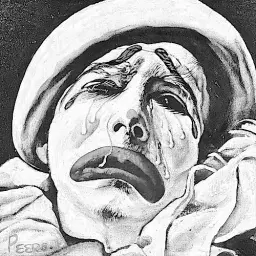
The fence posts stand, bleached and brittle,
a tidy graveyard for dreams not their own.
Each board a promise of security,
painted white by hands that never bled,
guarding a silence that screams privilege.
A lawn mowed to uniformity,
as if clipping blades could trim truth.
Beneath, the roots tangle in soil tilled
by those unseen in the storybooks,
their spines curved by centuries of labor
to raise a house that barely held them.
Inside, the air is stale with whispers
of manifest destinies and invisible hands.
Windows frame a world distorted,
a lens of 'normal' that filters out color,
washing the streets in sepia nostalgia.
The picket fence becomes a cage
for those who see the bars.
But who built this town?
Not the architects of ignorance
who claimed the blueprint as birthright.
No, it was those in shadow,
their brilliance stolen to light the chandeliers
of men who never thanked them.
It was the voices erased
to make way for the monotonous hum
of a narrative too pale to reflect reality.
Progress wears brown hands,
scarred from the heat of engines
that drove the country forward.
It sings in languages
that don’t fit neatly into syllabaries,
its rhythm syncopated, refusing the march
of conformity.
Progress carves its name
into the very foundations of a nation
too proud to look down.
And now, the town crumbles,
its picket fences splintered
by the weight of unacknowledged history.
The 'white normality' that painted
its walls in monochrome
is revealed as smoke—
a ghost-town haunted by the very people
who gave it life,
only to be exorcised.
Yet those ghosts do not wail.
They speak, steady and firm,
their presence undeniable.
They are the architects now,
designing futures that will not crumble,
drawing plans that see the beauty
in every hue.
And the white-picket fences
are repurposed for something new,
their shards forged into tools
to till a soil fertile with truth,
where a garden of multitudes can finally bloom.
Nov 24, 2024
Nov 24, 2024 at 4:57 AM UTC
The fence posts stand, bleached and brittle,
a tidy graveyard for dreams not their own.
Each board a promise of security,
painted white by hands that never bled,
guarding a silence that screams privilege.
A lawn mowed to uniformity,
as if clipping blades could trim truth.
Beneath, the roots tangle in soil tilled
by those unseen in the storybooks,
their spines curved by centuries of labor
to raise a house that barely held them.
Inside, the air is stale with whispers
of manifest destinies and invisible hands.
Windows frame a world distorted,
a lens of 'normal' that filters out color,
washing the streets in sepia nostalgia.
The picket fence becomes a cage
for those who see the bars.
But who built this town?
Not the architects of ignorance
who claimed the blueprint as birthright.
No, it was those in shadow,
their brilliance stolen to light the chandeliers
of men who never thanked them.
It was the voices erased
to make way for the monotonous hum
of a narrative too pale to reflect reality.
Progress wears brown hands,
scarred from the heat of engines
that drove the country forward.
It sings in languages
that don’t fit neatly into syllabaries,
its rhythm syncopated, refusing the march
of conformity.
Progress carves its name
into the very foundations of a nation
too proud to look down.
And now, the town crumbles,
its picket fences splintered
by the weight of unacknowledged history.
The 'white normality' that painted
its walls in monochrome
is revealed as smoke—
a ghost-town haunted by the very people
who gave it life,
only to be exorcised.
Yet those ghosts do not wail.
They speak, steady and firm,
their presence undeniable.
They are the architects now,
designing futures that will not crumble,
drawing plans that see the beauty
in every hue.
And the white-picket fences
are repurposed for something new,
their shards forged into tools
to till a soil fertile with truth,
where a garden of multitudes can finally bloom.