_New York
after a trip to Mexico, & not finally explored_.
In 1991, shortly before he died,
Motherwell
remembered a "conspiracy of silence"
regarding Paalen´s innovative role in the genesis of Abstract Expressionism.
Upon return from Mexico, Motherwell
spent time developing his creative principle
based on automatism:
"what I realized was that Americans
potentially could paint like angels, but that there
was no effective creative principle around,
so that everybody
who liked modern art was copying it;
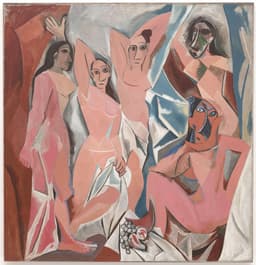
Gorky was copying Picasso;
******* was copying Picasso;
De Kooni
ng was copying Picasso;
I mean, I say this unqualifiedly,
I was painting French intimate pictures or whatever:
All we needed was a creative principle,
I mean something that would mobilize this capacity
to paint in a creative way, & that's what Europe
had that we
hadn't had;
we had always followed in their wake
& I thought of all the possibilities
| [ ], [ ]
of free association—because I also had
a psychoanalytic background
& I understood the implications of—let's just say it
might be the best chance
to really make something entirely
new which everybody agreed was the thing to do;"
Thus, in the early 1940s, Robert Motherwell
played a significant role in laying the foundations
for the new movement of
Abstract Expressionism (or the New York School):
"Matta wanted to start a revolution, m [a movement w/in
Surrealism].
He asked me to find some other
American artists that would help start a new movement;
it was then that Baziotes
& I went to see ******* & de Kooning
& Hofmann & Kamrowski & Busa & several other people;
& if we could come with something;
Peggy Guggenheim, who liked us said that she
would put on a show of this new business;
... so I went around explaining _the theory of automatism_
to everybody because _the only way_
that you could have a _move - - - ment_
was that it had some _common_
_principle_. It sort of all began that way."
In 1942 Motherwell began to exhibit
his work in New York and in 1944
he had his first one-man show at
Peggy Guggenheim’s _“Art of This Century”_ gallery;
that same year, the MoMA
was the first museum
purchase one of his works; From the mid-1940s,
Motherwell [ ], [ ]. ( )
became the leading spokesman
for _avant-garde art in America_;
his circle coming to include
William Baziotes,
David Hare, Barnett Newman, & Mark Rothko,
with whom he eventually started the Subjects of the Artist School (1948–49). In 1949 Motherwell divorced
Maria Emilia Ferreira y Moyeros and in 1950 he married Bettie
Little,
with whom he had two daughters
Jul 28, 2018
Jul 28, 2018 at 11:18 PM UTC
_New York
after a trip to Mexico, & not finally explored_.
In 1991, shortly before he died,
Motherwell
remembered a "conspiracy of silence"
regarding Paalen´s innovative role in the genesis of Abstract Expressionism.
Upon return from Mexico, Motherwell
spent time developing his creative principle
based on automatism:
"what I realized was that Americans
potentially could paint like angels, but that there
was no effective creative principle around,
so that everybody
who liked modern art was copying it;
Gorky was copying Picasso;
******* was copying Picasso;
De Kooni
ng was copying Picasso;
I mean, I say this unqualifiedly,
I was painting French intimate pictures or whatever:
All we needed was a creative principle,
I mean something that would mobilize this capacity
to paint in a creative way, & that's what Europe
had that we
hadn't had;
we had always followed in their wake
& I thought of all the possibilities
| [ ], [ ]
of free association—because I also had
a psychoanalytic background
& I understood the implications of—let's just say it
might be the best chance
to really make something entirely
new which everybody agreed was the thing to do;"
Thus, in the early 1940s, Robert Motherwell
played a significant role in laying the foundations
for the new movement of
Abstract Expressionism (or the New York School):
"Matta wanted to start a revolution, m [a movement w/in
Surrealism].
He asked me to find some other
American artists that would help start a new movement;
it was then that Baziotes
& I went to see ******* & de Kooning
& Hofmann & Kamrowski & Busa & several other people;
& if we could come with something;
Peggy Guggenheim, who liked us said that she
would put on a show of this new business;
... so I went around explaining _the theory of automatism_
to everybody because _the only way_
that you could have a _move - - - ment_
was that it had some _common_
_principle_. It sort of all began that way."
In 1942 Motherwell began to exhibit
his work in New York and in 1944
he had his first one-man show at
Peggy Guggenheim’s _“Art of This Century”_ gallery;
that same year, the MoMA
was the first museum
purchase one of his works; From the mid-1940s,
Motherwell [ ], [ ]. ( )
became the leading spokesman
for _avant-garde art in America_;
his circle coming to include
William Baziotes,
David Hare, Barnett Newman, & Mark Rothko,
with whom he eventually started the Subjects of the Artist School (1948–49). In 1949 Motherwell divorced
Maria Emilia Ferreira y Moyeros and in 1950 he married Bettie
Little,
with whom he had two daughters
Directed by ****** O. Bradley
Request permission to use this poem