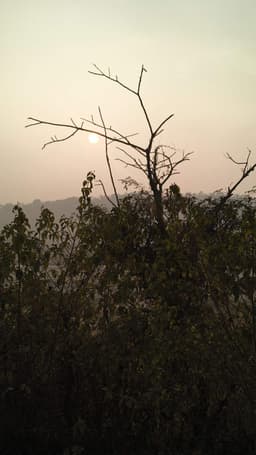
The universe runs on a kind of oppression—
the dominance of what we choose to see.
As the nurses came for the last time,
your head creased into the wedged pillows,
your breathing like an aircraft
aviating through tropospheres
it was never meant to reach,
the striking birthmark on your wrinkled neck.
I stood at the window.
All I could see was the house sparrow
on the electric wire outside,
holding itself on a thin line.
You had a favourite pastime:
calling me by my full name
when I had done something right.
Rama.
It was deepthroated like a fact,
like the most basic thing you knew to be true.
I had not heard it in weeks.
When he touched my shoulder,
Go home—
I nodded.
I kept nodding
until my back curved like a crescent,
until the nods meant head down.
The white shroud,
the turned-down faces,
conversations where no one could meet my eye—
I moved through all of it.
The only thing that kept me
was the trip we'd planned to Alwar—
after the smoke left your body,
the day with no date in the calendar.
I had fed my hope with maps and routes.
But grief asks:
Did I not hear the coughing?
Did I not see that every breath
was a fight for air?
I studied the cracks along my outsole.
I had science. I had belief.
Neither knew what would save
the lit firecracker
Did I let my own thoughts
become the thing that fed on
what I refused to know?
I don't want to believe
there was less of you to see.
But one thought keeps returning,
keeps occupying the whole mind:
You stood in that room,
and the place was only home
because you called my name.
Rama.
I heard it
the last time.
I am forgetting
how it sounded.
Apr 5
Apr 5, 2026 at 1:37 PM UTC
The universe runs on a kind of oppression—
the dominance of what we choose to see.
As the nurses came for the last time,
your head creased into the wedged pillows,
your breathing like an aircraft
aviating through tropospheres
it was never meant to reach,
the striking birthmark on your wrinkled neck.
I stood at the window.
All I could see was the house sparrow
on the electric wire outside,
holding itself on a thin line.
You had a favourite pastime:
calling me by my full name
when I had done something right.
Rama.
It was deepthroated like a fact,
like the most basic thing you knew to be true.
I had not heard it in weeks.
When he touched my shoulder,
Go home—
I nodded.
I kept nodding
until my back curved like a crescent,
until the nods meant head down.
The white shroud,
the turned-down faces,
conversations where no one could meet my eye—
I moved through all of it.
The only thing that kept me
was the trip we'd planned to Alwar—
after the smoke left your body,
the day with no date in the calendar.
I had fed my hope with maps and routes.
But grief asks:
Did I not hear the coughing?
Did I not see that every breath
was a fight for air?
I studied the cracks along my outsole.
I had science. I had belief.
Neither knew what would save
the lit firecracker
Did I let my own thoughts
become the thing that fed on
what I refused to know?
I don't want to believe
there was less of you to see.
But one thought keeps returning,
keeps occupying the whole mind:
You stood in that room,
and the place was only home
because you called my name.
Rama.
I heard it
the last time.
I am forgetting
how it sounded.