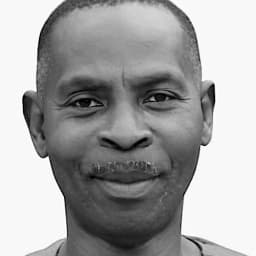
Before Ogun wore iron,
he wore music—
the same hands that forged the cutlass
tuned the strings of things unseen,
the same fire that tempered metal
learned first to temper feeling.
So when you came,
King,
Sunny as the harmattan sun
that burns without apology,
warm as the compound fire
that feeds the whole household
we knew whose cognomen you carried,
whose footprints you filled
without diminishing.
I met you first
not in a concert hall,
not in the amplified cathedral
of the wealthy and the ticketed,
but on the streets of Ibadan,
where the sun baked the laterite
into something almost sacred,
where my feet, bare and dusty,
carried the weight of a childhood
still learning what it was.
Your music leaked
through the louvres of strangers' windows,
spilled from the record players
of those who could afford
what I could only receive,
and I received it
the way the beggar receives the wind:
fully,
without owing anyone,
without the debt of purchase
diminishing the gift.
It was mine
the way Ogun's road is everyone's,
the path belongs
to those who walk it,
not to those who built it.
Your guitar,
not merely instrument
but griot's tongue,
oriki in six strings,
each note a proverb
the elders hid in plain hearing,
each strum a parable
the patient ear unpacks,
each lyric a lantern
at the labyrinth's entrance
the kind that does not say
follow me
but says instead;
here is what the darkness
is actually made of,
here is how to walk through it
without losing your name.
You were not merely musician.
You were blacksmith of sound—
Ogun's other trade,
the forge applied to feeling,
hammering raw experience
into the shaped beauty
of what can be carried,
what can be remembered,
what can be sung
when the original wound
has become something
the throat can hold
without bleeding.
Your voice
river of dark honey,
slow as a blessing,
deep as a wound
rose like incense
from the shrines of Ife
to the aerials of Lagos,
carrying the theatrics of the divine
into the ordinary afternoon
of a people who needed
to be reminded
that their ordinary afternoon
was itself a kind of divine.
You left scars of beauty on the soul
the specific wound
that only great art inflicts:
the mark that does not hurt
but illuminates,
that does not diminish
but defines,
that does not close
but becomes
the place through which
the most light enters.
From Syncro System
to Syncro Feelings,
you refused the comfort
of the already-known,
the warm repetition
of your own proven sound.
You reinvented
the way Ọṣun reinvents,
not abandonment of source
but deepening of it,
the river finding new channels
without forgetting
the spring it came from.
Her sweetness does not thin with distance;
nor did your sound lose salt by changing shape.
No predecessor sat
where you sit.
No successor
will sit there either;
the throne shaped itself
around you
the way the iroko's roots
shape the earth
they have inhabited
for a century:
the absence,
when it arrives,
will be
its own monument.
King Sunny Ade
today, as you turn seventy-eight,
the bata speaks your names
in rhythms older than your birth,
the talking drum remembers
what history forgets,
the Ifa of your art
stands open at the verse
that says:
a man who gave the people
back their own voice
dressed in beauty
they did not know they possessed,
this man has fulfilled
the griot's highest covenant.
The skies require no cannon
to honor such a life.
The music itself is the salute,
still sounding,
still finding the cracked louvres
of the houses of the poor,
still spilling into streets
where barefoot children
are learning for the first time
what they are.
Salute, King.
Your strings still remember
what your fingers taught them.
Your voice still carries
what your chest first learned to hold.
And somewhere in Ibadan
on a street the sun
still bakes to something sacred
another child receives your music
through a stranger's window,
not knowing it was ever
only yours to give,
learning only
that the wind belongs to everyone,
that beauty is not the property
of those who can afford it,
that Ogun's road is long
and older than the feet
now walking it
and that the music,
though it began before them,
begins again
in them.
© Lanre Adebayo
3d ago
May 31, 2026 at 11:15 PM UTC
Some praise singers mistake the python for rope
they stroke its scales and call the coiling an embrace.
Reno, you have read the scar as decoration,
traced the brand of iron across a nation's back
and called the burning a warmth of
bliss
He was no leader,
he was a scientist of sorrows,
a babalawo of betrayal
who cast his Odù not in palm nuts
but in the cold geometry of power.
His hands,
cold scalpels,
carving futures into fractures,
splitting the nation's sternum
to examine what democracy looked like
from the inside,
then stitching nothing back.
He distilled a nation in his test tubes,
pipetting hope into deception,
titrating freedom with the acid of his will,
until what remained
was neither the promised wine
nor the threatened poison,
only the residue of a people's patience,
crystallised beyond drinking.
We raised our calabashes
toward the promise of a river
that kept receding as we walked.
He told us the oracle was speaking.
He told us transition was a seed
requiring his particular darkness to germinate.
And we believed
the way the newly bereaved believe
the herbalist who says the fever
must worsen before the cure takes hold.
The Ifa that should have named the thief
slept in his khaki pocket,
its cowries scattered
by the same hand that would,
when the time came,
crumple an election
like a love letter written to someone
who had already left the country.
June 12 arrived wearing white,
Obatala's cloth,
the people's will woven into its hem.
Twelve million voices spoke
through the ballot's quiet thunder,
the deeper thunder of
a people who had decided
who they were.
Then,
the sleight of hand
that was always his truest skill.
A pen stroke.
The way a single matchstick
reduces the iroko's years
to an evening's ash.
Èwò violated
the sacred prohibition broken,
the fence around the people's Àṣẹ
torn open,
and what rushed through that breach
was not the wind of change
but the cold draft of a corridor
where the people's mandate
wandered without a door.
Iron-fisted,
yet afraid to clutch the truth
What manner of general
commands battalions
but cannot command
the simple declaration
the people have spoken,
and I obey?
If democracy was ever more
than a masquerade costume
worn until the drumming stopped,
he would have stood
as the oba stands before a new season,
arms open,
crown steady,
declaring the verdict of the oracle
even when it names
someone other than himself.
He would have dared
the surrender of power
to the principle
that outlasts power.
But the Odù he consulted
spoke only one verse,
remain.
So Reno
when you walk softly
on these footprints of fire,
when you stroke the python
and call its coiling leadership,
remember
the Àṣẹ of a people
is not a general's to dissolve.
He was afraid.
And a nation paid
the full price
of one man's fear.
What is a crown
that rests on a throne of broken oaths?
What is a nation
whose destiny was bartered
by the cowardice of a king?
The oracle unearths
what the praise singer chooses to bury.
© Lanre Adebayo
4d ago
May 30, 2026 at 11:49 PM UTC
1. TRANSIENCE
I,
sentinelled
In the drizzle
Of a time
Wet----------
Like a drake
Without a nest
Trembling ----------------
Like a lily
At streamside you beckoned
And gave me shelter
In your dome
But
When a deluge
Chased the drizzle
And the sky hounds
Sanctioned the chase
You chased me out
Into the cold.
2. DWELLING
I, too,
have known
the rustle of cold on skin
and the silence
that drips
from doors unopened.
But once,
a roof leaned low
not to send me off—
but to listen.
It did not promise
forever,
only the now:
a mat,
a bowl of warmth,
a gaze that did not flinch.
And so I stayed.
Storms grumbled.
Tiles cracked.
The walls sometimes wept.
Still—
I swept the hearth.
I planted figs.
I became
dweller,
not guest.
3. THRESHOLD
I stand
between door and dusk,
with a heart still dripping
from old rains.
Your mat is clean.
Your fire glows.
But I smell
the memory of smoke
from houses I once called home.
I do not ask
to be a god
or guest—
only to bring
my whole weight in,
shadow and all.
If I step in,
will you flinch
when thunder speaks my name?
If you step back,
know this:
I have learned
to build fire
from splinters.
And I will not
knock twice.
© Lanre Adebayo
May 24
May 24, 2026 at 3:52 PM UTC
The market roared, a sea of voices,
dust clinging to her weary face—
a lone star against an unyielding sky.
No father’s hand to steady her steps,
only the fire within, the will to carve a future,
to mend the fractures of fate,
to gather her children whole.
She called out,
soft whispers woven with quiet pleas,
her hands, though illiterate,
grasping the key to a world she longed to know.
She dreamed in pages,
in letters she could not trace,
in knowledge untamed, boundless as the wind.
Each book a burden, each book a grace,
bought with coins stained in toil,
held with reverence, a relic of sacrifice.
A blue-bound dictionary—treasure wrenched from hardship,
an offering for her child,
she who first taught me the rhythm of life
in the warm, sanguine recess of her womb.
Through years of struggle, through halls of learning,
her faith stood, unshaken, unwavering.
She listened, she bore my fears,
her love, a quiet, steady tide.
No comfort claimed, no rest embraced—
only the weight of dreams not hers,
but mine to carry.
And when the title came,
etched in scholarly ink,
it was hers as much as mine,
a monument to all she had given.
Tawakalitu Amope—
my first haven, my guiding light,
the pillar upon which my dreams stood tall.
Now silence lingers where her laughter once bloomed,
an absence that fills the room with longing.
No earthly hunger shall touch you now,
no sorrow, no creeping shadow of pain.
Only the feast of angels,
only the glow of paradise,
only rest—finally, softly, completely.
Sleep well, Mother.
Your love remains,
woven into the rhythm of my days,
the pulse of my being,
the song you first sang to me
in the crimson warmth of your womb.
© Lanre Adebayo
May 20
May 20, 2026 at 3:42 PM UTC
I.
Listen—
all scriptures speak with thunder and hush.
A king’s voice,a prophet’s word, a parable’s shadow—
they tremble between the heart and the hand.
Ọ̀rọ̀Ọba bí iná,
the monarch’s word burns,
yet the wise collect warmth,not ash.
For in the house of Ifá, the fire’s purpose is light,
and every flame is judged by the character it reveals— Iwà Pẹ̀lẹ́ is the true hearth.
II.
Israel’s hills remember the trumpet:
Joshua,Deuteronomy, the voices of conquest—
dust rising like prayer,
blood a language of accountability,
not eternity.
Every march once a cradle,
every sword a teacher.
Every war, a verse from the Odù of a people,
a lesson to be divined, not a destiny to be repeated.
III.
Across deserts, across seas,
another voice calls:
“Fight those who fight you,
do not transgress.”
The Qur’an’s circle is drawn
like a fence around mercy;
swords in hand,yet tempered by conscience,
by treaty,by ethics,
by the whisper:Aláàfíà ni ọba—peace is king.
Here, the law is Èwò—sacred prohibition;
a boundary that protects the community’s Àşẹ, its vital force.
IV.
And then the Nazarene, barefoot, speaking in stories:
a king demanding loyalty,
enemies trembling in parables,
yet He walks without armies,
His only weapon:mercy.
He turns the sword inward,
softens the heart,
tilts the scales toward forgiveness.
He is the walking Ètùtù—the coolness,
the antidote to the world’s fever, restoring Ìwà where it was cracked.
V.
But hear the Babaláwo reading the signs of time:
“Not all battles are Ijà of flesh; some are Ijà of spirit.
Ọ̀rúnmìlà says: ‘Àgbọn (the wasp) defends with sting,
yet its home is a fragile hive.’
The Ògèdè (banana plant) offers fruit and perishes.
Which path preserves the grove?”
Hear the Yoruba rhythm beneath it all:
“Itan ni a n pa—
we tell the story,
we do not become its violence.”
History’s drum,scripture’s fire,
they teach,they caution, they illuminate.
The spear in the story
is not the spear in life.
It is a Sàǹgó staff: a symbol of authority,
not a command to burn the world.
VI.
So meditate:
the war outside is mirror,
the judgment within.
The true Idà (sword) is discernment—Ìmọ̀tàn—
the sharp edge that divides truth from illusion in the heart.
Every fiery word,every marching verse,
calls us to reckon—not to strike.
The sword is an allegory;
the fire,a teacher.
And the teacher’s ultimate lesson is Ìwà rere: good character,
the only offering Òrìşà accepts without blood.
VII.
Where the scrolls open,
where the spears rest,
where conscience meets scripture—
there is the silent court:
The Ìdí (source), the unseen Àkàşe (record) where Èmí (consciousness) kneels.
God’s whisper beyond the sword,
the dawn beyond the parable,
the peace that crowns all understanding.
That peace has a name: Aláàfíà—
wholeness, calm, completeness—
the condition in which Àşẹ (life force) flows unbroken.
VIII.
And finally, the revelation of the Odù:
Where violence ends,
the Òrìşà begin their true work.
For they are not fed by chaos, but by order;
not by spilled èjè (blood), but by offered èjè (sacrifice of self).
Let the words breathe,
let mercy speak,
let the ultimate sacrifice be the surrendered will.
Let peace,
in all its forms,
be our iré—our divine blessing,
our chosen portion from the sacred palm.
© Lanre Adebayo.
May 20
May 20, 2026 at 3:33 PM UTC
1. Tale of a Popular Griot
A griot—
pregnant,
heavy with
baby woes,
stripes,
and swaggers.
A ravisher,
in a verdant gown,
***** him—
poured syphilitic *****
into his ***
The griot,
courted by four fancies,
bared his behind
like a cheap ****
unaware of two jokers
dangling below the belt:
Bomb Dele,
and **** the Griot.
Jail Fela,
and **** the griot
Sap the masses,
and **** the griot.
Lock Gani,
and lock the wisdom-house.
Seal the lips—
that sang the truth.
And **** the griot.
Pain, not pleasure—
his wriggle is labour pain.
Griot pumped full
by sadistic ****
We wait,
chin in palm,
for the birth
of his cantankerous fume.
2. The Silent Drum
The talking drum
once called the dawn,
but now —
it is quiet.
The market women whisper:
"Where is the griot?"
"Why does his tongue rot in silence?"
His drum,
once a lion’s roar,
now sleeps
like a stone in riverbed.
Children ask—
"Did he die?"
"Or did he run?"
"Or did they pluck his tongue
and hang it
like a thief’s hand?"
The wind brings no answer.
Only the rustle
of history, afraid.
And in the shrine,
a calabash cracks.
3. Return of the Griot
He came back
like a curse breaking loose,
like harmattan smoke
that refused to scatter.
His lips were cracked,
his eyes—red with old fire.
He called the town:
Come!
Gather!
Your griot returns—not to sing,
but to warn.
Call (Griot):
Ẹ gbọ́? (Do you hear?)
Response (Chorus):
A gbọ́! (We hear!)
Call:
Ta ló ki eto re bomi ipayinkeke?
(Who turned your birthright into a bowl of sorrow?)
Response:
Ìjọba jagidijagan! (A government of madness!)
Call:
Ta ló dáná sí ilé-ìmọ̀?
(Who set fire to the house of knowledge?)
Response:
Àwon olóṣèlú! (The politicians!)
And the griot
pointed to his scars:
“These are my verses.”
He raised his drum
and thunder shook the silence.
4. Fire on the Talking Skin
The drum speaks now—
not with rhythm
but with rage.
Each slap a sermon.
Each beat, a bomb.
Each silence, loaded.
Boom— for the lies.
Boom— for the stolen votes.
Boom— for the buried truth.
Boom---- for Fela
Boom----- for Dele
Boom— for Gani.
Boom— for Funmilayo.
Boom— for every market burnt in riot.
The griot does not dance.
He sets fires.
In his mouth:
proverbs sharp as blades.
On his tongue:
lightning.
He becomes
a god with a talking skin.
And the people
begin to remember
how to fear
truth.
5. Elegy for the Deaf
He sang.
They clapped—
but they did not hear.
He warned.
They danced—
but not to his drum.
Now the sky is grey
with unwept tears.
The roads crack open
from too many blind feet.
And the griot—
he does not mourn himself.
He mourns
those who made mockery
of his madness.
Call:
Ta ló sọ pé òtítọ́ yóó máa sùn?
(Who said truth will sleep forever?)
Response:
Kò sẹ́ni! (No one!)
So he walks into the wind,
his drum still burning.
His voice—
a ghost that grows louder
each time they try
to forget.
© Lanre Adebayo
May 19
May 19, 2026 at 1:51 PM UTC
If you see the babuas
With hips wide as harvest moons,
Do not frown.
Do not mistake their burden
For disease or disgrace—
They are only bending
To the hunger coiled in their bones.
Should you glimpse the babuas
Crowned with storms of unkempt hair,
Do not call them beasts.
They are only tuned
To the thunder grumbling through their bellies.
If you meet the babuas
Cloaked in patchwork skies—
Mimicking the chameleon’s vow—
Do not laugh.
Do not name them mad.
They are only stitching their scars
Into sails to catch the wind’s cold coin.
If you watch the babuas
Twist like fire through the marketplace,
Do not ask why they dance
With such fever in their feet.
They are only stoking
The furnace behind their ribs.
For we are all babuas:
Hips swaying beneath the weight of want,
Hair wild with unspoken storms,
Bodies wrapped in borrowed colors,
Dancing—always dancing—
To the rhythm of a world
That feeds on our hunger.
© Lanre Adebayo
May 16
May 16, 2026 at 3:05 PM UTC
I look at you all over
And you flash you teeth
Glowingly like sunlight
I look at you all over
And you swing your waist
Gracefully like moonlight
It is not to detest
But to attest
That I look at you all over
Contours and crest
This twin – balusters
Of your front – yard
So splendidly erected
Their jingles are like belfry’s
Beckoning me to the gallery
Of a master- hand
The gothic threshold
Of your courtyard
So assiduously engraved
I can’t wait to traverse its loft
That bay of your backyard
So opulently baroque
I behold it is there our world revolves
I look at you all over
With thought not impure
I only revere
The strokes of the rare sculptor.
© Lanre Adebayo
May 15
May 15, 2026 at 4:45 PM UTC
I
saw one
in the dew – drop
of a wet morn
inside her fluffy nest
a floor of polished brass
she offered me
And
I said no
For it was not doing me
Like sleep
I
Met two
In the gold ray
Of a warm noon
Amidst the verdant growth
A mat of golden fronds
She offered me
And
I said no
For it was not doing me
Like sleep
I
Held three
In the moon- cream
Of a cool night
Before the giggling stars
The cleft of her luscious chest
She offered me
And
I said yes
For it was doing me
Like sleep
And
Deep down in that sublime sleep
I heard the quivering lips
Of the giggling stars
Sing the annunciation
Of the birth of another priest
A priest whose sceptres
Are the drum
the pen
and the palm nuts.
© Lanre Adebayo
May 14
May 14, 2026 at 10:15 AM UTC
Gongon
you the reincarnate of ayan tree
the resurrect of sacrificial beast
your eyes, wide, penetrating like opele tray
see into the deep groves of grumbling spirits
the rhythmic echoes of those weird- looking strings
baroquing your naked juicy *******
like the heavenly dress of igunnuko
are the sonorous voices of rancoured deities
of neglected ancestors in the gloom
of spirits vexed by their prodigal sons
Gongon
when ayan in acrobatic gait grabs
when kongo in ritual kowtow touches
your skin irritated, your eyes red
and your spiritual mouth cries, wailing
In baritone chant of proverbial rhythm
the foolish in the shackles of tasteless beer
wriggle like fly that falls in deep red oil
not able to fly, not able to dance, not
able to understand the esoteric sob
the wise, in palmwine wisdom, nods head
he has drunk deep the ripples of olokun
drank palm wine and salty blood with ogun
dined with the patriarch, orunmila
and understands the proverbial echoes
of the dead, of immortal black spirits.
© Lanre Adebayo
May 13
May 13, 2026 at 5:02 PM UTC